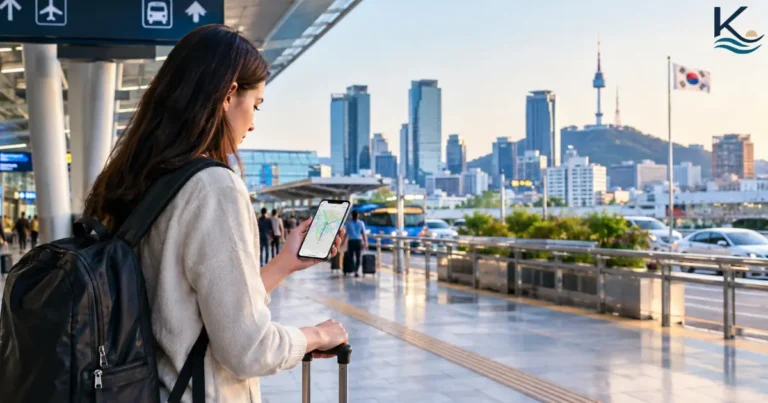
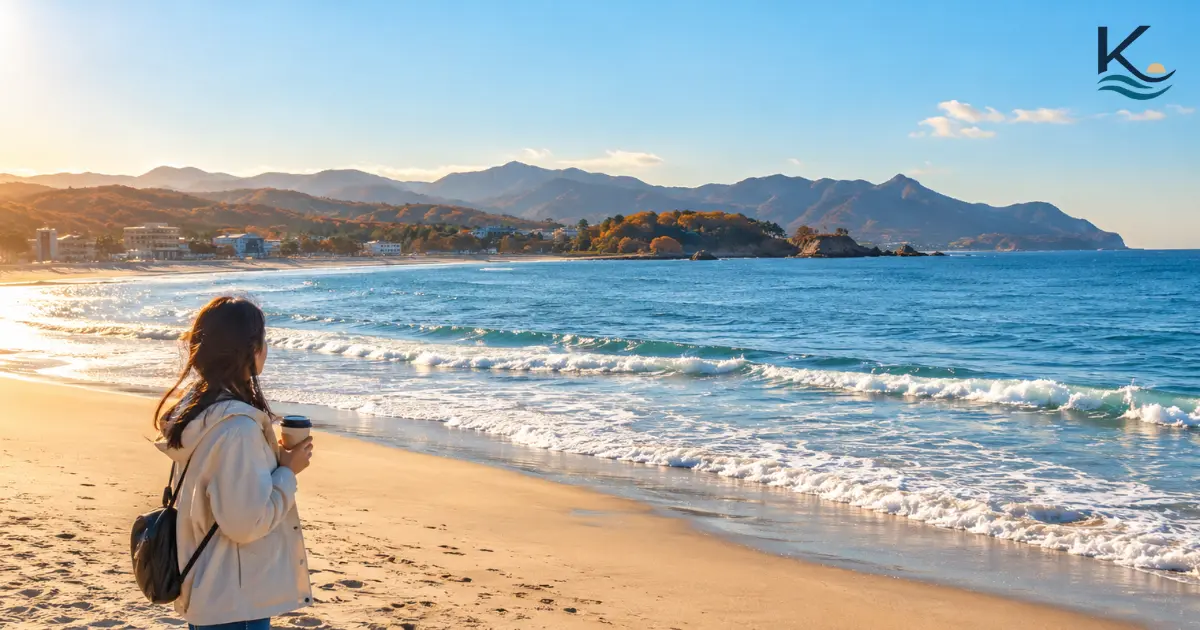
South Korea Beach Trip Out of Season Advice: How to Travel in Autumn/Spring
Korean beaches become popular among people only in July. Rows of umbrellas. Children everywhere. Queue for the showers, queue for the fried chicken, queue for the toilets. Exciting indeed. Though difficult to get.Here’s the thing, though — and this is the whole secret of South Korea off-season beach travel: the same beaches in October? April? Practically empty. Cold water, sure. Nobody swimming. But the sand is yours, the cafés have window seats free, and nobody is going to photobomb your sunset.
What is more, those same beaches are almost empty in October and April. Certainly, water is cold. Nobody decided to take a bath there. But the beaches are all yours, the window of the café is available, and nobody will ruin your evening watching the sunset.
Coming to Korea from the USA and a beach holiday does not mean that you have to fight for a spot with your towel, an off-season holiday is what you need. The current post is quite practical. For the full month-by-month breakdown, start with our guide to when to visit Korean beaches.
Definition of “Off-Season”
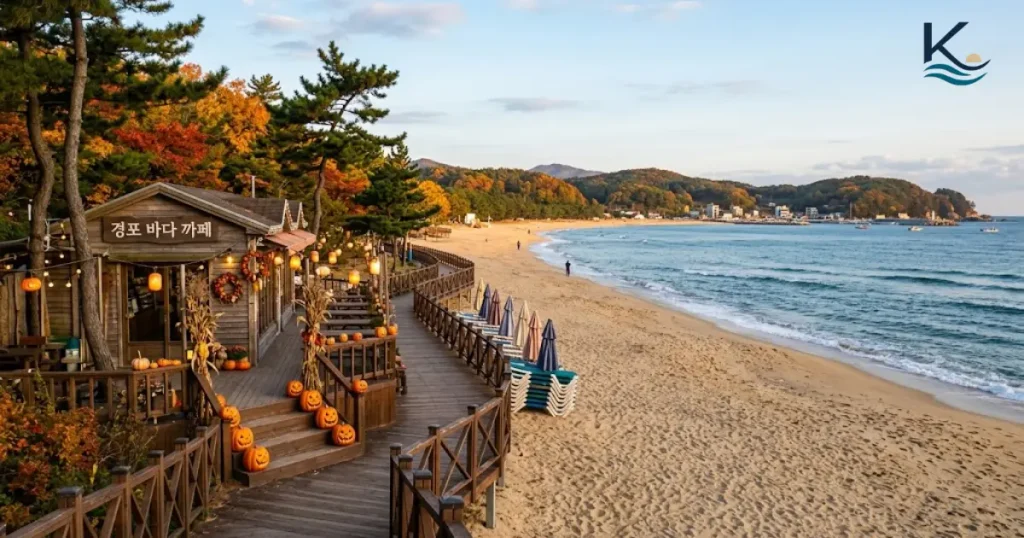
In this case, the off-season (known as shoulder season in the travel industry) comprises spring (March through May) and autumn (September through November). Anything apart from the official swim season in July and August.
Now you understand the trick:
There is no swimming here. Instead, it offers walking weather, empty viewpoints, affordable accommodation and relaxed coastal towns. There are tourists who prefer visiting during summer months for one reason or another. Fair enough. However, there are many tourists who make just one visit in October and they don’t come back until August.
Why Would Anyone Bother, Without Any Chance to Swim?
Recently, Korea has been experiencing several consecutive record tourism seasons and, in summer, this could be witnessed at the beaches, for instance, Haeundae on a Saturday in August is more of crowd logistics than a beach day.
In off season:
Cheaper rooms – the lower end of prices; not for $120+, but for 50-80, including those with sea view;
No queues; none in Sky Capsule, none in a famous cafe, and none in a photo studio.
Loose planning is available for you; you can stroll around, gaze up into the sky, and choose. It’s raining? Then go to the markets and museums. Is it sunny? Then go to the beach. There’s plenty of time for you. The restaurant owners don’t rush to engage in conversation with you. People who work in the cafes aren’t in a hurry.
The one bad thing can be summarized in one phrase: it’s cold and there are no more lifeguards. In case if your purpose is to swim, stop reading now. Otherwise, continue.
The Weather, Truthfully
The weather is cool. T-shirts and layered clothes should be enough to cover the whole day. However, around twenty minutes after the sun goes down, there will be a cool breeze coming from the ocean, reminding you of the time of the year.
Which means the following: dress in layers. The coat in your bag, the warm layer beneath the coat, and shoes ready for a five-mile walk. And that is everything.
And lastly, here is another piece of advice to follow: do not listen to the general weather forecast on your phone; use Korea Meteorological Administration forecasts for coastal regions. The weather is changing very fast on the coast – if it rains at 9 in the morning, it will shine at 4 in the afternoon. Plenty more of this kind of thing in our South Korea travel tips.
Fall: Places to Visit
Gangneung and Sokcho: Mountains Turning Red
If there is only one off-season trip that you do, do this one, in October.
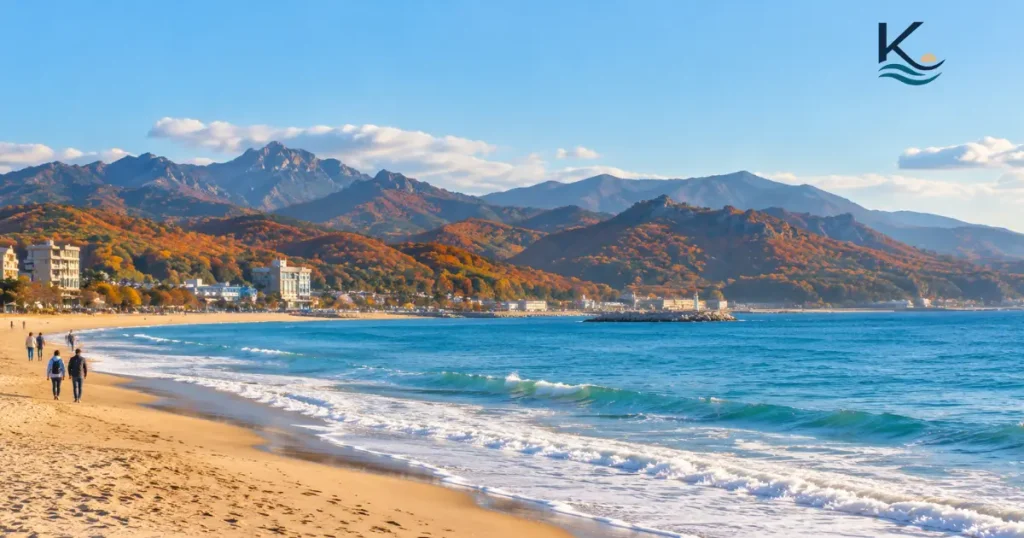
Mount Seorak, inland from the coast, begins its transformation process in late September and reaches its peak in mid to late October – orange and red ridge after ridge just beyond the East Sea. Take your hike to the top of Sokcho early in the morning in the crisp light, and then descend to the beach in the afternoon. Two totally different experiences on the same day, just a twenty-minute drive apart.Our East Coast beaches guide covers the logistics.
To the south of Sokcho by a short hop, Gangneung does it more leisurely. Gyeongpo becomes quiet and calm. Coffee Street in Anmok, which is essentially a row of cafes gazing out at the sea, is meant for October afternoons. Have something hot to drink, sit by the window, and stay longer than expected. The East Coast beaches guide has all the information.
Jeju Island: Silver Grass and Empty Sand
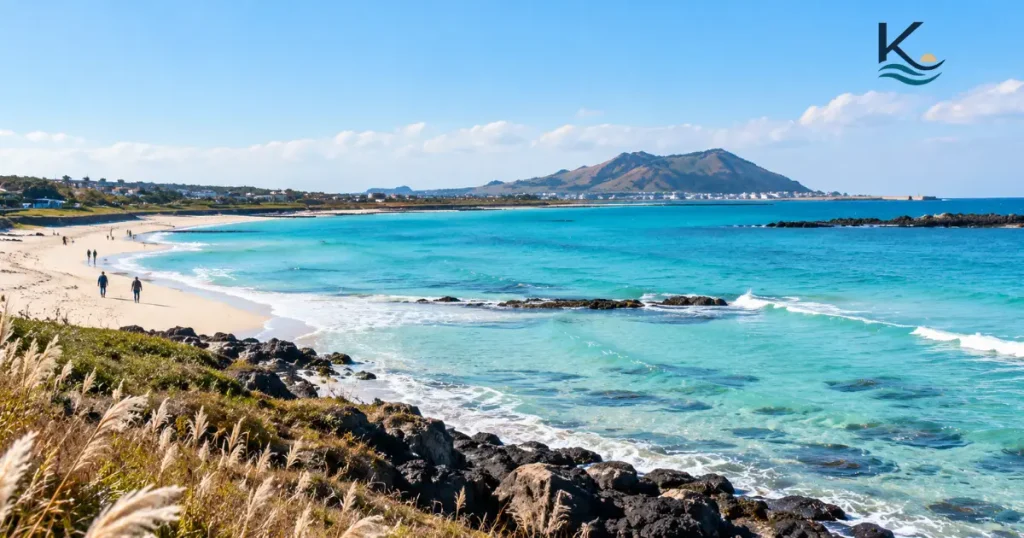
Jeju marches to its own beat. In fall, the volcanic oreum hills are covered with silver grass, which rises to waist level and flows like water when touched by the wind. The sand down on Hyeopjae and Hamdeok is deserted, but keeps its color – that brilliant, shallow Caribbean-blue that surprises all at first sight. Aewol is a wonderful evening destination for cafes looking out onto the shoreline and sunset entertainment. We have our own Jeju beaches guide showing both locations together.
Taean and the West Coast: Sunset Country
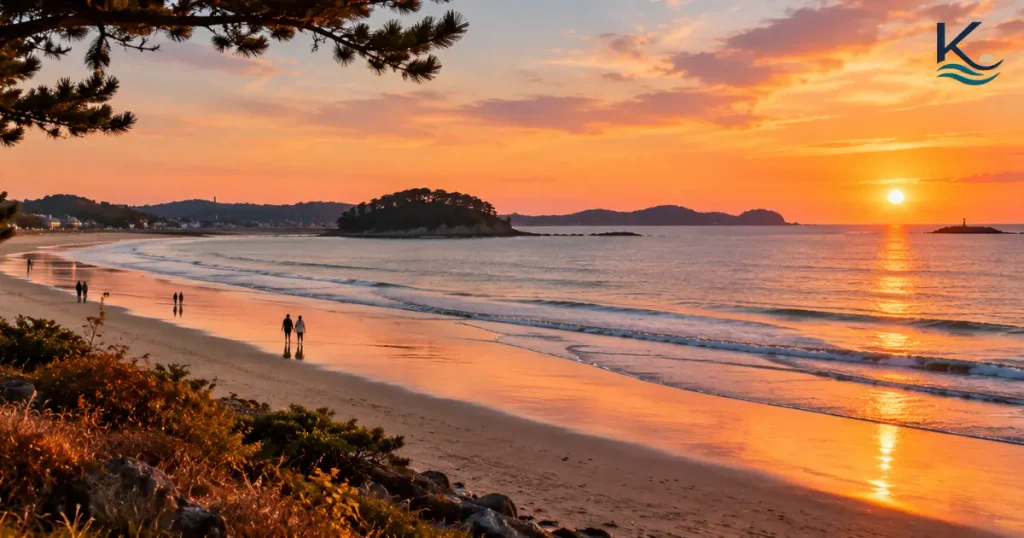
The western coast is quite another story: huge tidal flats, expansive sunsets, very little crowd no matter how good a month it is. Mallipo Beach and the pine forest of Anmyeondo Island are the places to remember.
Best of all? It’s nearby. Just a few hours away from Seoul, making Taean the most convenient destination in this entire post – depart on Friday, indulge in seafood and watch the sunset, return Sunday without any rush.
Spring: Flowers Bloom, Flowers Fade, Then Silence
Spring would also work well but you need to be aware of the calendar. Blooming dates can shift about a week here or there every single year. Make sure that there will be an extra day available and don’t commit yourself to just one weekend.
Cherry Blossoms, With Sea in the Background
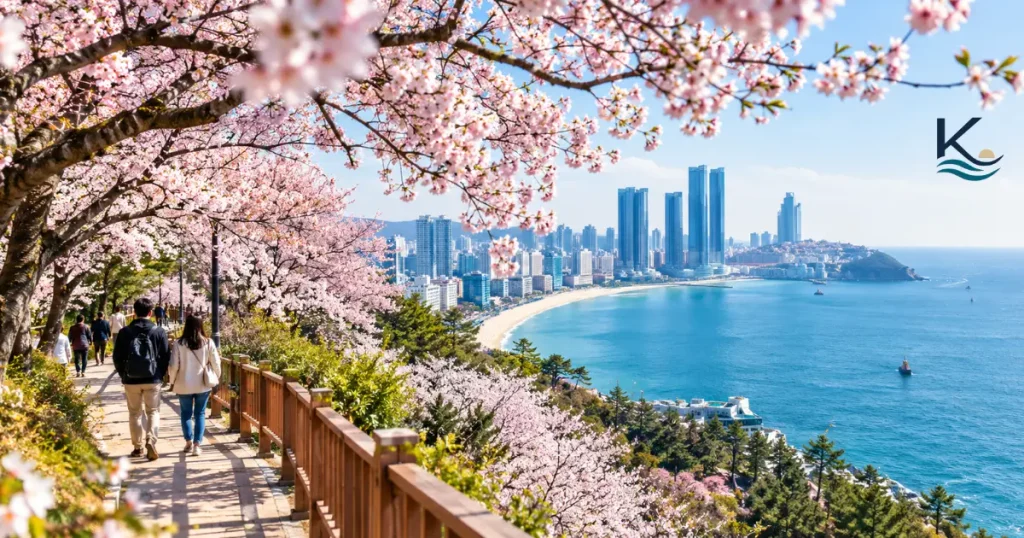
Bloom season is March through early April. Best pictures you can get from Dalmaji Hill in Busan – the road going up from Haeundae, blooming cherry blossoms on top, and the sea beneath. There’s a blooming festival in Gangneung’s Gyeongpo area.
And then there’s Jinhae. Korea’s blossom city, an entire town surrounded by cherry blossoms — and apparently half the nation comes to town on the same Saturday. The destination lives up to its reputation, and the crowds are very real. Visit during the week if you can, and base yourself around the Korea Tourism Organization’s blossom prediction for the year, not last year’s Insta photos.
Canola and Tulips: Spring’s Second Act
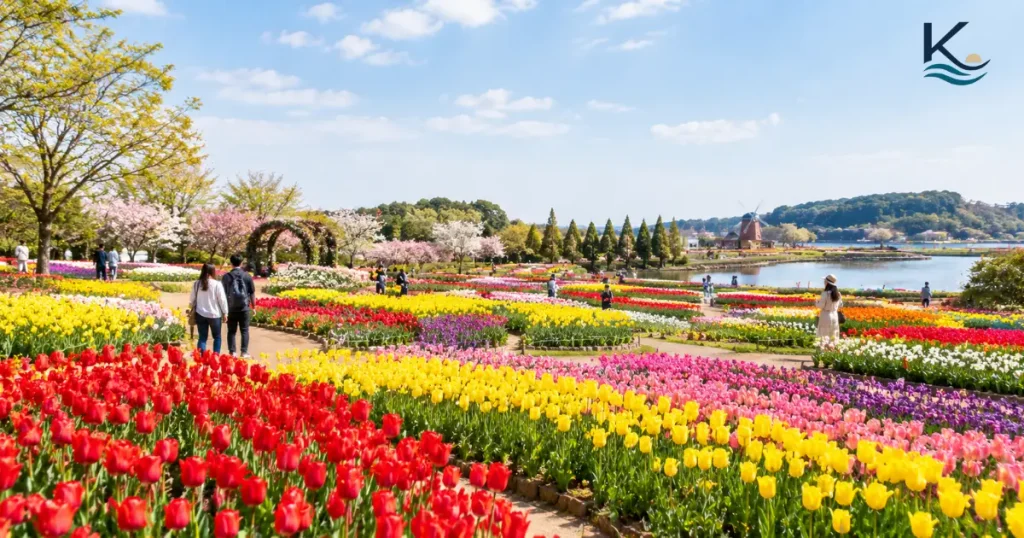
It’s time for Jeju to turn yellow again. Canola flowers from March until April, sometimes even lining the coastal road, as cheery as it sounds.
April also sees the tulip festival at Korea Flower Park in Taean, flower upon flower, somewhat bizarre against the pines and mudflats. Neither is a ‘If we have time’ stop while it’s going on, it’s the main attraction.
Namhae: Take It Slow On Purpose
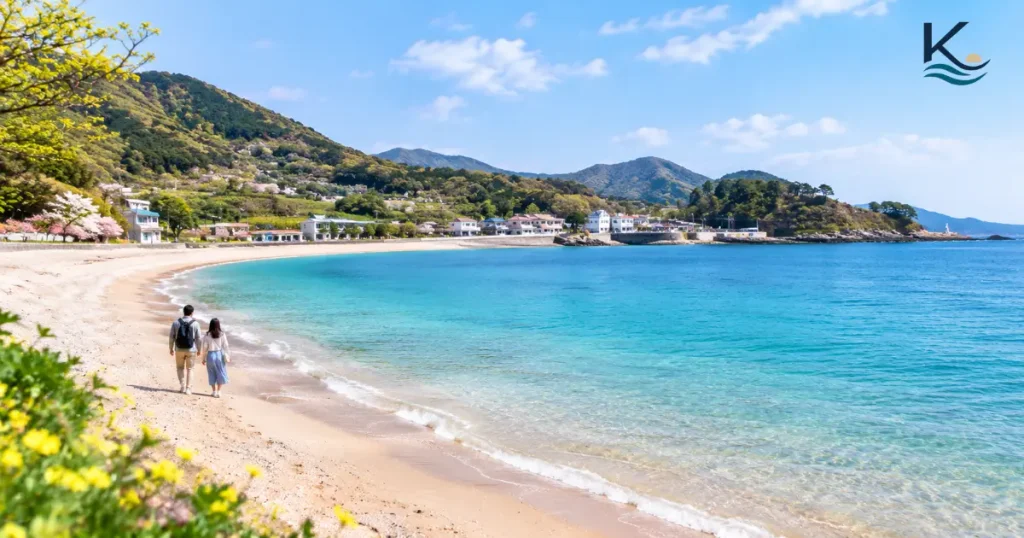
Then there is Namhae, that island no one visits at first but that everyone falls in love with after their visit. Villages built in steps, small ports, sea paths and the beautiful Sangju Silver Sand Beach – white, calm and peaceful in an almost theatrical manner.
Get a car rental for at least two days. Namhae despises haste and loves to be idle.
How To Get To The Real Quiet Beach
Brief summary: be small, be weak, be early. The beach located near the fishing village, five minutes away from the well-known beach, has the same water but a lot fewer people on it. Mornings are good too – even the busy beaches tend to open only around eleven.
Best Korean Coastal Destinations by Season
| Destination | Best Season | Highlight | Best For |
|---|---|---|---|
| Gangneung | Autumn & spring | Sea-view cafés and Gyeongpo blossoms | Couples, coffee lovers |
| Sokcho | Autumn | Seoraksan fall foliage and beach views | Hikers, photographers |
| Busan | Spring | Dalmaji blossoms and coastal rail rides | First-time visitors |
| Jeju | Autumn & spring | Silver grass and canola fields | Slow travel, scenery |
| Taean | Spring & autumn | Tulips, pine forests, and sunsets | Weekend getaways |
| Namhae | Spring | Terraced villages and quiet sandy beaches | Road trippers |
Finally, something small but which really completes the journey. Just before setting off, just open the beach on Naver or Kakao Map and check out the latest uploaded photos. Then you’ll know the tide level and the parking place. Five minutes. Easy.
But What Do You Do All Day?
Good question, considering that swimming is not possible. The truth is that there is a second menu in this coastal area – without counting the time for a swim, days go by longer here.
Ride the Rail Bike and the Sky Capsule
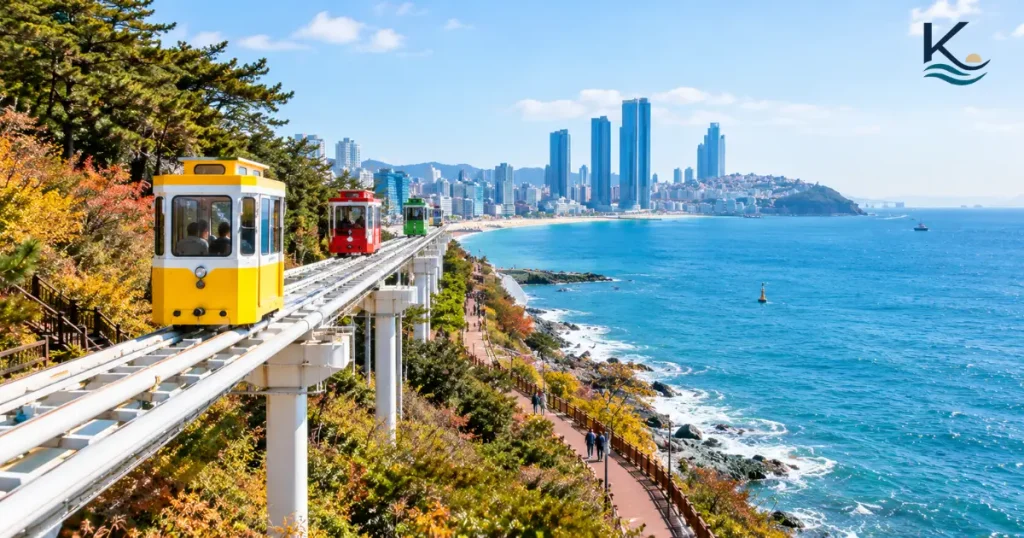
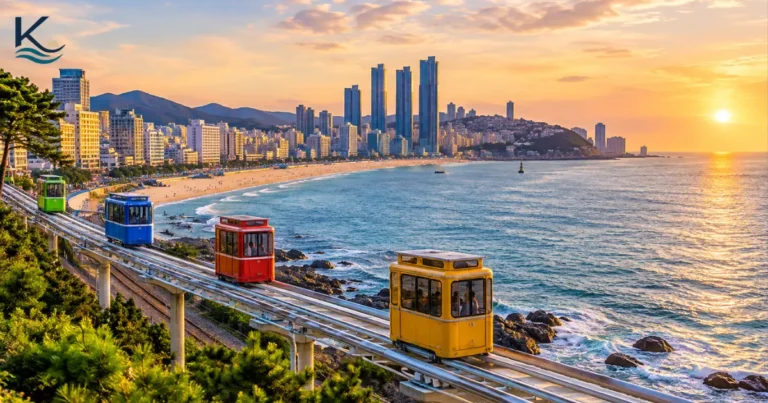
The Coastal Rail Bikes are as simple as the name says – pedal bikes riding through old railway tracks, along the seashore. The Samcheok Ocean Rail Bike is the one most people have heard about, and yeah, it’s really as much fun as the pictures show. In Busan, the Blueline Park of Haeundae operates the Beach Train as well as the cute little pods called Sky Capsule. They get booked up in August. You can try your luck in October and just… take a walk. All booking details here in our Haeundae Sky Capsule guide.
Cafés First, Then the Fish Market
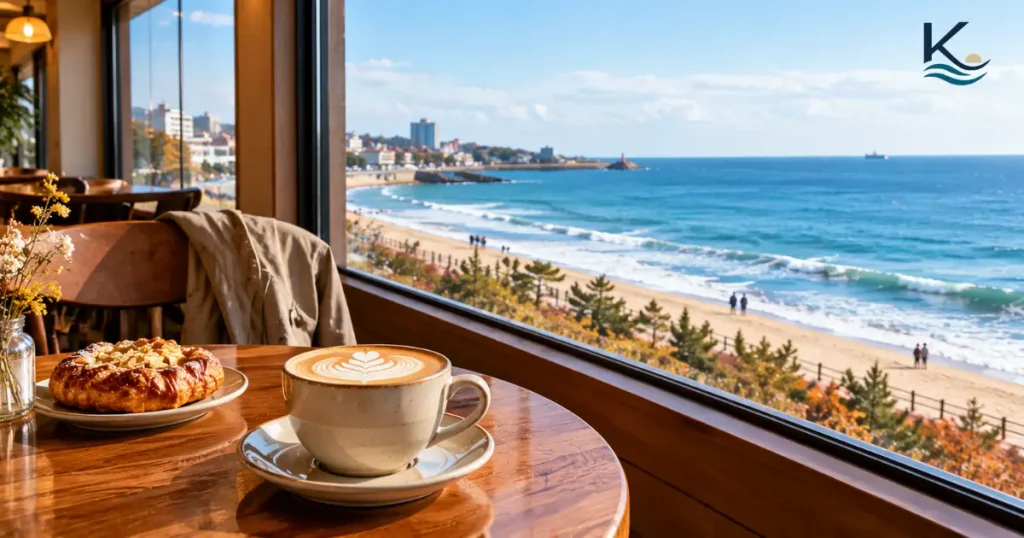
It is wrong to consider the café merely a place to drink coffee. In the Korean coastal cities, the seaside café is the destination itself – Anmok in Gangneung, Songjeong in Busan, Aewol in Jeju. Seat by the window, a hot drink, no rush anywhere.
That’s not killing time; that IS the activity.
Then eat at the fish market. Sashimi cut in front of you, shellfish off the grill, a hot pot that fogs your glasses. Café at four, market at six, walk it off along the water. Cold day, perfect day.
Walk It Off
The coastline is stitched together with boardwalks and real trails — Igidae in Busan, the Olle routes all over Jeju — and both are better at 60°F (15°C) than at 90°F (32°C). Time them for the light:
Sunrise: the east coast. Set one early alarm in Gangwon. Once. Worth it
Sunset: face west in Taean and just wait
Long walks: Jeju Olle trails — pick a course, walk half, bus back 345955 Anmok Coffee Street, Gangneung
Planning It from the United States
Flights and the K-ETA Situation
You’ll land at Incheon. Nonstops from the US West Coast run roughly 11–13 hours, and US passport holders get 90 days visa-free — no paperwork drama before the flight beyond the basics.
The K-ETA needs a plain-English explanation, so here it is. K-ETA is Korea’s electronic travel authorization, and right now Americans are exempt from it under a temporary arrangement that runs through December 31, 2026. From January 1, 2027 .it’s expected to switch back on — unless the exemption gets extended, which has happened before. If it applies to your trip, it’s a short online form and 10,000 KRW, about $7. Because this rule has moved more than once, check the official K-ETA website before you book anything, and fill in Korea’s e-Arrival Card online before you fly.
Getting Around (and Two Rules That Matter)
Trains do the heavy lifting. KTX gets you from Seoul to Gangneung in about two hours, Seoul to Busan in about two and a half, and Jeju is an hour by plane. Buses cover the rest, slowly and cheaply.
The two rules: blossom and foliage weekends sell out, so book those trains and rooms early — and don’t try to see everything. Seoul plus ONE coastal base is a trip. Seoul plus four bases is a luggage exercise.
One Serious Note
Lifeguards leave when summer ends. Off-season beaches are unstaffed, the swim zones come down, and the East Sea gets deep and cold, fast. Don’t swim unless a beach is clearly open and staffed. The waterline is close enough — the trip loses nothing.
South Korea Off-Season Beach Travel :FAQ’s
Q1: What is South Korea Off-Season Beach Tourism?
Ans:Traveling to South Korea’s beaches during spring and autumn instead of visiting them between July to August for swimming — trading swimming for serene beaches, blooms or fall colors, more affordable accommodation and cafes where one gets to sit.
Q2: Which are the best beaches in South Korea to visit during fall?
Ans:Gangneung & Sokcho, if someone would like to engage in mountain as well as beach activities at once, Jeju Island (Hyeopjae & Hamdeok) due to its water colors and Mallipo by Taean for its sunsets. Come here mid to late October for the fall colors.
Q3: When would people see cherry blossoms on the Korean beaches?
ANS:End of March/early April. Dalmaji Hill overlooking Haeundae in Busan, the Gyeongpo area in Gangneung and Jinhae if someone can tolerate crowds of people around him or her. One should make sure to find out the forecast of the year as to the blossoms’ dates.
Q4: Do US citizens need a K-ETA for Korea?
ANS:Not currently — US passport holders are temporarily exempt, and the arrangement runs through December 31, 2026. The e-Arrival Card is still valid, and K-ETA should be available starting from 2027 if not extended further. This regulation has changed since, so make sure to visit the official K-ETA website before booking.
Q5: Are there quiet beaches in South Korea?
ANS:Absolutely. Little beaches in Gangwon, Taean, Namhae and Jeju Island — on a weekday morning, not during July and August months — usually have almost no people there at all.
The Short Version
Summer promotes swimming. Off-peak season promotes everything else: the colors, the coffee shops, the empty beach at 9 AM, the setting sun that belongs to you only.
Choose the season and choose one location. Then consult our When to Visit guide with monthly schedules, get the free checklist and make your train reservation before foliage-weekend crowds get it into their minds. See you there.