When to Visit Korean Beaches

When to visit Korean beaches depends on one thing first: do you want to swim, or walk the sand? This guide gives you the swim season, the water temperatures and the crowds — month by month, in plain English.

Swim season: early Jul – late AugWater temps in °F & °CMade for US travelers
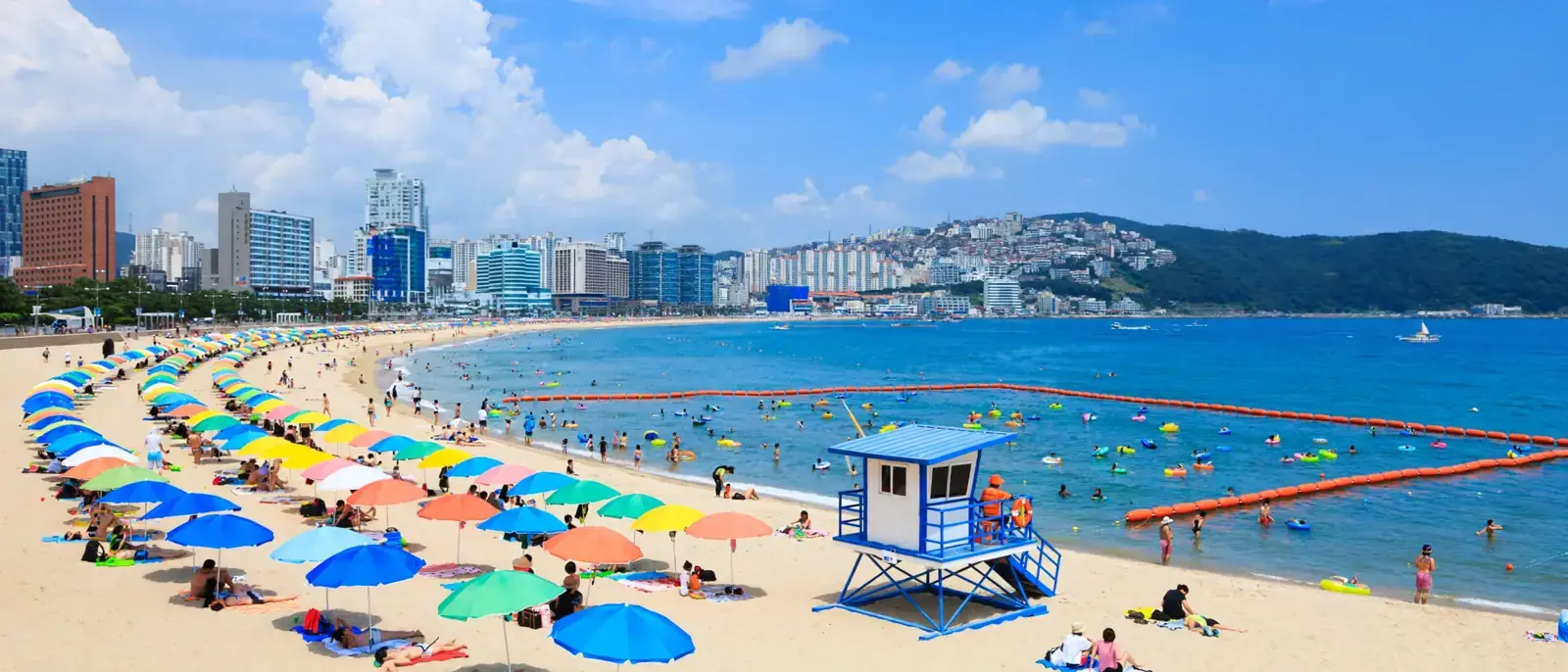
When to visit Korean beaches in peak summer — rows of colorful parasols, swimmers in a buoyed swim zone and a lifeguard tower

Peak season on a Korean beach — parasols, lifeguards and warm water. Pick the right month and this could be your trip.

The Short Answer

Four honest answers, before the month-by-month detail.

Best for Swimming

Late July to Mid-August

The official season: lifeguards, swim zones and the warmest water of the year, around 75°F (24°C). It is also the busiest and priciest window — book early.

Best Overall

Early September

The sea is still warm, the crowds have gone home and stay prices drop. Official swim zones close at the end of August, so expect quieter, less supervised beaches.

Best for Quiet Trips

October

Mild days, empty sand and coastal cafés at their calmest. Far too cold to swim — perfect for everything else.

Best for Budget

November to March

The cheapest stays of the year, winter light festivals in Busan, and thousands gathering on east-coast beaches for the New Year sunrise.

Korean Beaches, Month by Month

Typical coastal weather around Busan and the east coast; Jeju usually runs a few degrees warmer. These are typical temperatures, not promises — check the forecast before you go.

January

No Swimming
Air 32–43°F (0–6°C) · Sea 50°F (10°C)

The quietest month. Cold, clear days, winter light festivals in Busan — and big crowds only for the New Year sunrise on the east coast.

February

No Swimming
Air 34–46°F (1–8°C) · Sea 49°F (9°C)

Still winter. Empty beaches, the lowest stay prices of the year and crisp air for coastal walks. Bring a real coat.

March

No Swimming
Air 43–57°F (6–14°C) · Sea 50°F (10°C)

Spring arrives. Cherry blossoms reach Jeju and Busan in late March, but the sea is still far too cold to swim.

April

No Swimming
Air 52–66°F (11–19°C) · Sea 54°F (12°C)

One of the nicest walking months: blossoms up north, mild sunny days and quiet sand everywhere.

May

Wading Only
Air 61–75°F (16–24°C) · Sea 61°F (16°C)

Warm days, cool sea. Great for beach towns and cafés. A brave dip late in the month — but no lifeguards yet.

June

Almost
Air 68–81°F (20–27°C) · Sea 68°F (20°C)

The water finally feels pleasant late in the month, but beaches are not officially open yet, and the rainy season usually starts in late June.

July

Swimming
Air 75–86°F (24–30°C) · Sea 72°F (22°C)

The official swim season opens in early July, with lifeguards and swim zones. Expect monsoon rain early in the month, then hot, busy beaches.

August

Swimming · Peak
Air 79–90°F (26–32°C) · Sea 75°F (24°C)

Peak season: the warmest water of the year and the biggest crowds. Book stays 4–6 weeks ahead, go on weekdays, and watch typhoon forecasts.

September

Season Over
Air 70–82°F (21–28°C) · Sea 73°F (23°C)

A local sweet spot: warm sea and emptying beaches. Swim zones closed at the end of August, and an early-September typhoon is still possible.

October

No Swimming
Air 57–72°F (14–22°C) · Sea 66°F (19°C)

The golden month for coastal trips: mild air, clear skies and fall colors from late October — with the sand almost to yourself.

November

No Swimming
Air 45–59°F (7–15°C) · Sea 59°F (15°C)

Quiet and cheap. Fall colors peak early in the month; the sea is cold and the cafés are cozy.

December

No Swimming
Air 34–46°F (1–8°C) · Sea 54°F (12°C)

Winter lights in Busan and Haeundae, empty beaches — and the build-up to the famous New Year sunrise gatherings.
What Matters Most to You?

Four kinds of traveler, four different "best" months.

You want warm water.

Come between late July and the end of August. Outside the official season there are no lifeguards or swim zones, however warm the day feels.

You hate crowds.

Pick early September or a June weekday. In peak season, even famous beaches are calmer before 10 AM.

You want low prices.

Stays are cheapest from November to March and priciest in late July and August. Shoulder months — May, June, October — split the difference.

You are timing a festival.

The Busan Sea Festival lands in August, Gwangalli's drone shows fly on Saturday nights, and the New Year sunrise is January 1. Festival dates change every year — check before you book.

Does the Region Change the Answer?

A little. The season is the same shape everywhere, but the details move.

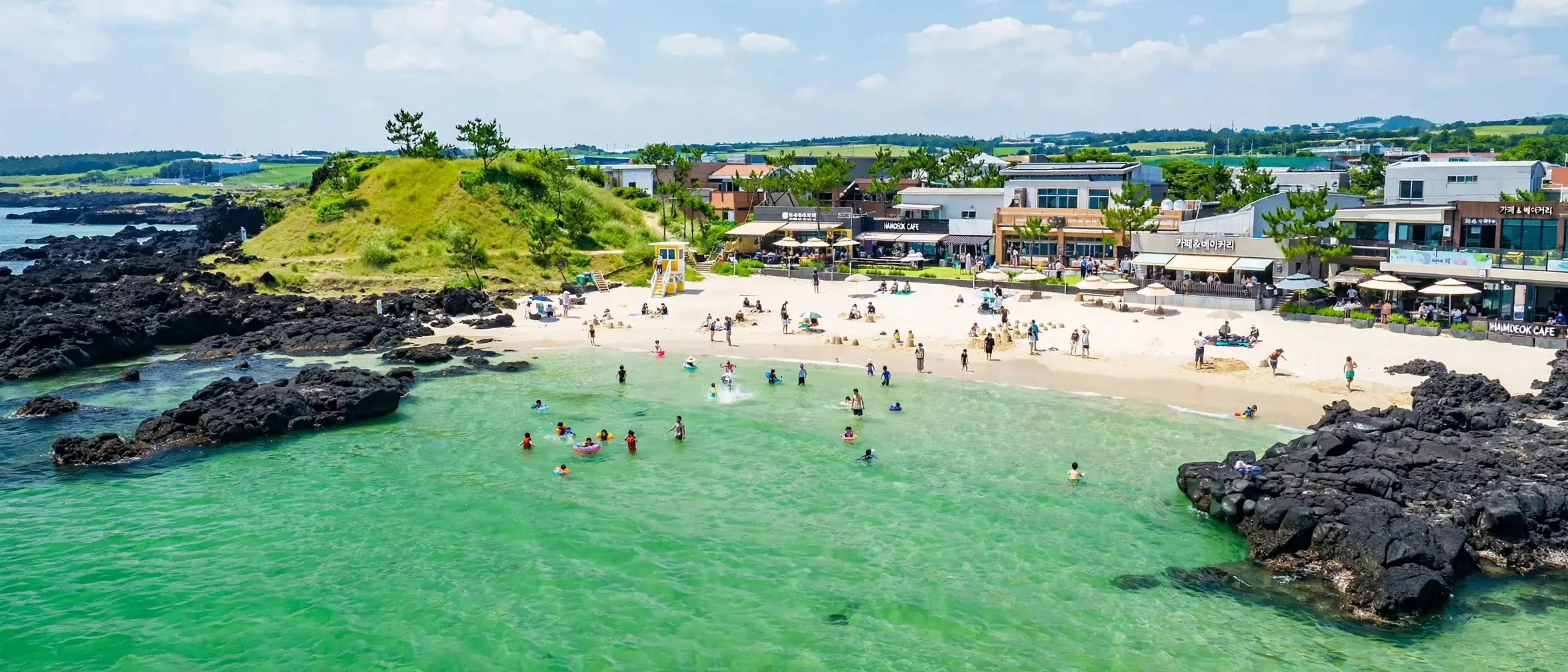
Hamdeok Beach on Jeju Island, with clear turquoise water and a shallow sheltered bay

Jeju Island

The warmest water and the longest season. Jeju swims a little earlier and later than the mainland — but winters are windy, and you will want a rental car.

Explore Jeju beaches →
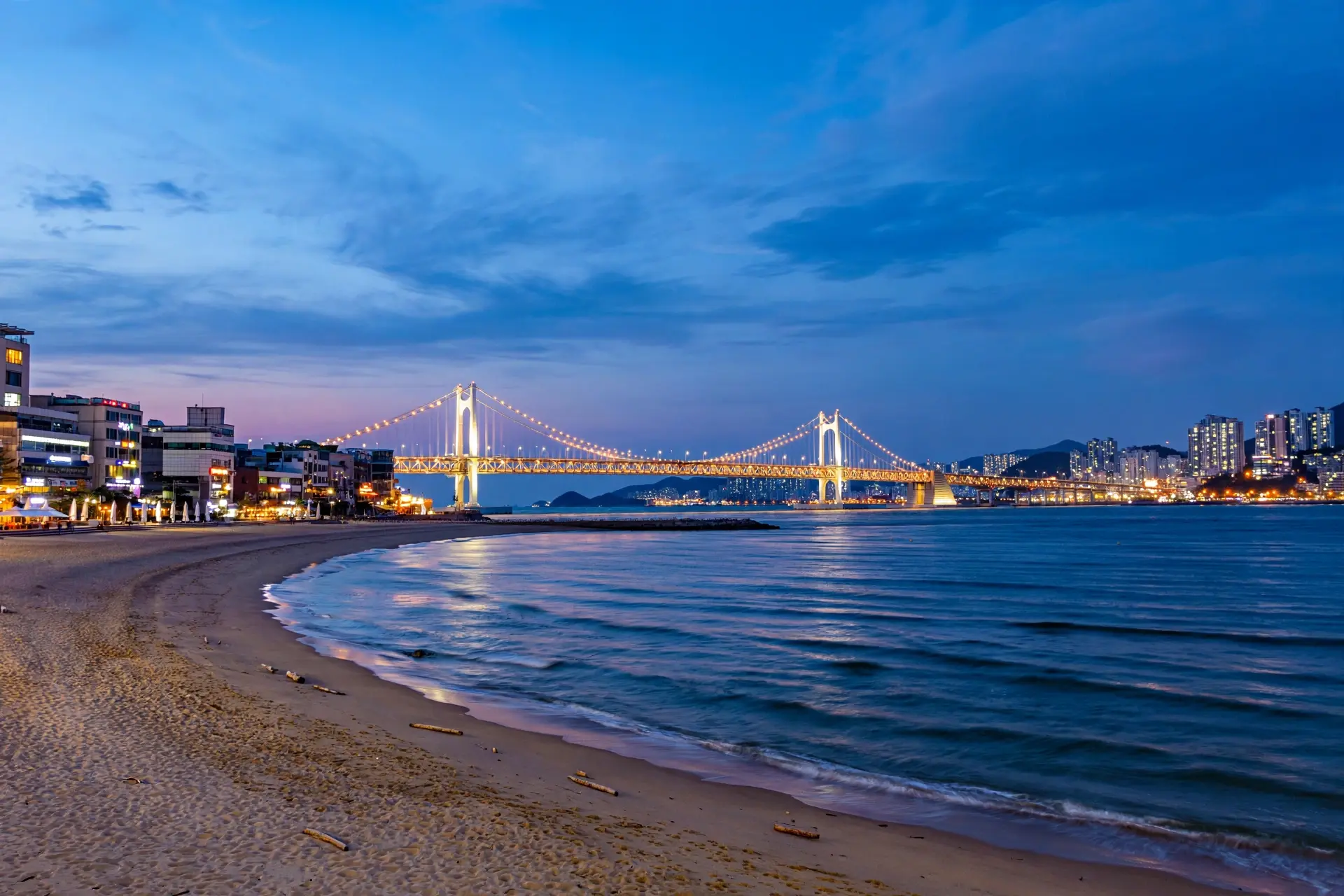
Gwangalli Beach in Busan, with soft sand and the Gwangan Bridge in the distance

Busan

The classic season, with city convenience. Haeundae and Gwangalli follow the national dates; mild winters bring light festivals instead of swimmers.

Explore Busan beaches →
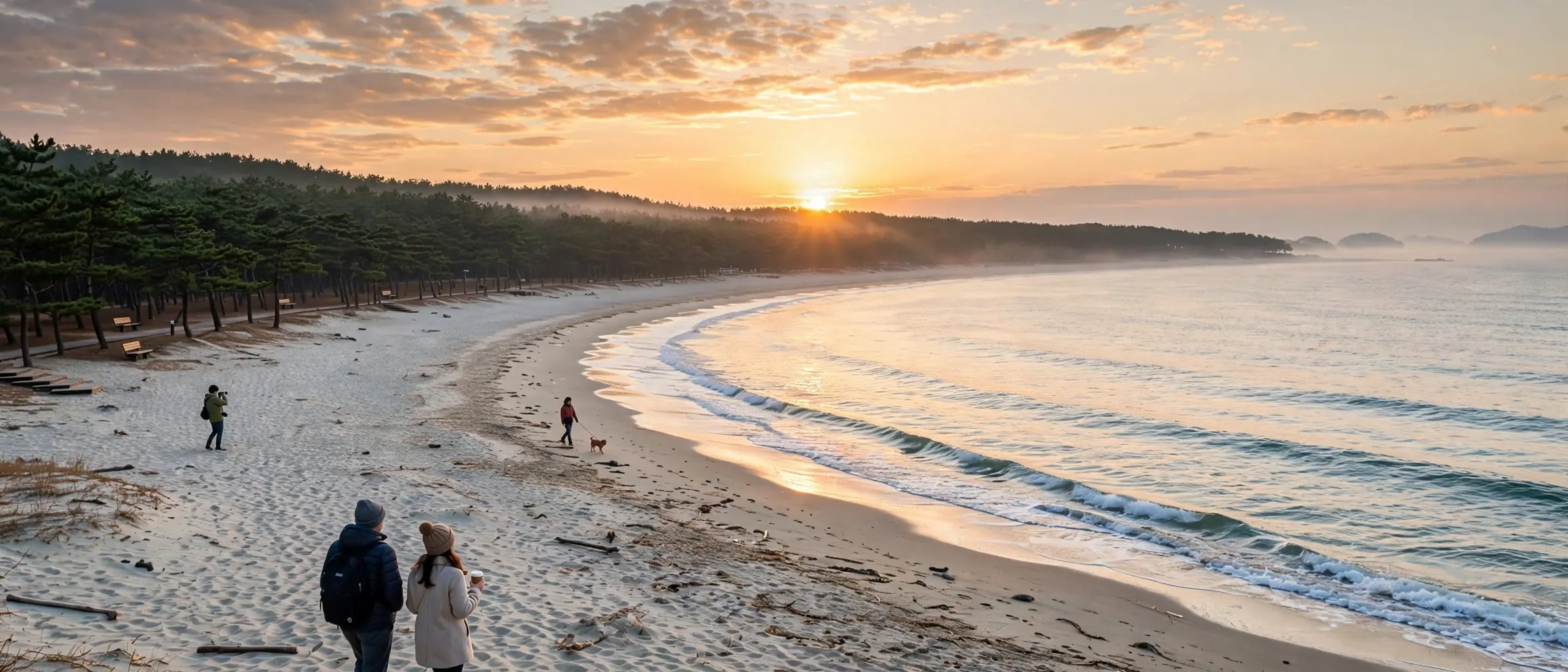
Gyeongpo Beach on Korea's east coast, a wide sandy beach backed by pine trees

East Coast

The coldest water, the shortest swim window — and the best sunrises in Korea. The sea deepens fast here, so stay inside the swim zones in season.

Explore East Coast beaches →
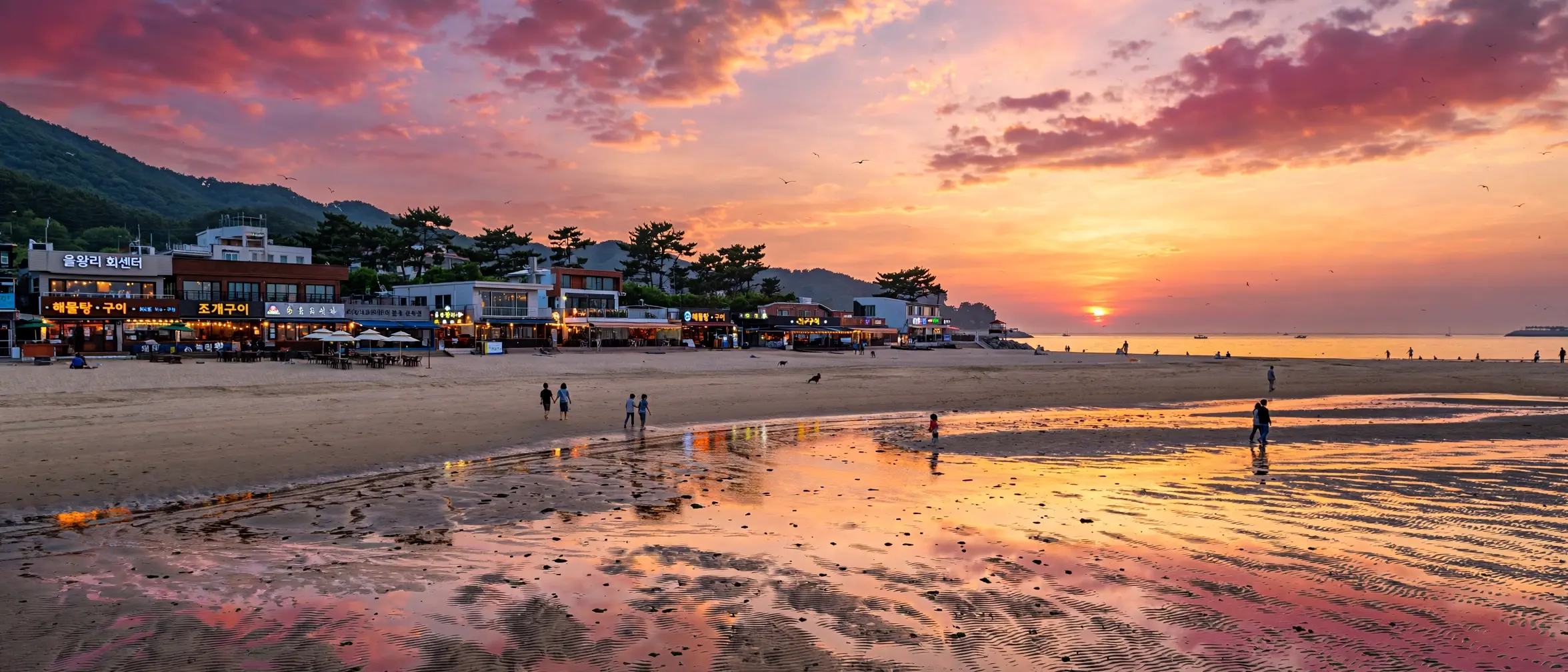
Eurwangni Beach near Seoul at sunset, with wide tidal flats in Incheon

Near Seoul

Here the tide matters as much as the month. Eurwangni and Muuido are tidal-flat beaches: time your visit for high tide if you want to get in the water.

Explore beaches near Seoul →

When to Visit Korean Beaches: Common Questions

When is the official swimming season at Korean beaches?

Most Korean beaches officially open for swimming from early July to late August, with lifeguards, marked swim zones, showers and rentals. Each city sets its own exact opening and closing dates every year, so check the dates for your beach before you book. The Korea Meteorological Administration is the official source for beach weather and sea conditions.

Can I swim in September?

The water is still warm — around 73°F (23°C) — but the official season has ended: no lifeguards, no swim zones, and swimming may be closed at the main guarded beaches. Many people still paddle at quieter spots; follow local signs and never swim alone.

What is the monsoon season — should I avoid it?

Korea's rainy season (jangma) usually runs from late June into July. It does not rain all day, every day — but build flexibility into beach days, keep cafés and museums as backups, and know that prices are lower than in August.

When is the water warmest?

August, peaking around 75°F (24°C) off Busan and Jeju. June and October sit in the high 60s°F — pleasant for a quick dip for some people, chilly for most.

Is a winter beach trip worth it?

Yes — for a different trip. Winter brings empty beaches, the lowest stay prices, Busan's light festivals and the New Year sunrise tradition on the east coast. Just pack for wind, and leave the swimsuit at home.

When do Korean beaches get crowded?

Weekends all summer, and most of all from late July to mid-August, when Korean schools are on holiday. National holidays like Chuseok (September or October) also fill beach towns. For peak dates, book stays 4–6 weeks ahead.

Get the Free Korea Beach Trip Checklist

One printable page with everything on this page turned into tick-boxes: what to book, what to download, what to pack and what to check the week you fly.

  • Booking & documents — flights, KTX, K-ETA check
  • Apps & money — Naver Map, Papago, T-money, cash float
  • Packing — swim gear, water shoes, sunscreen, light layer

Free, no spam — just the checklist and the occasional beach-season update.