
Busan Beaches: Haeundae, Gwangalli & Songjeong
Haeundae Beach — Busan's Most Famous
Gwangalli Beach — Busan's Sunset and Night Beach
Songjeong Beach — Busan's Surf Beach
Busan is South Korea’s beach city, with three very different beaches to choose from. Haeundae is the famous one — wide sand, skyline and calm swimming. Gwangalli is the sunset beach, facing the lit-up Gwangan Bridge. And Songjeong is where Korea learns to surf. This guide shows you how to pick the right one — and how to get there, in plain English.
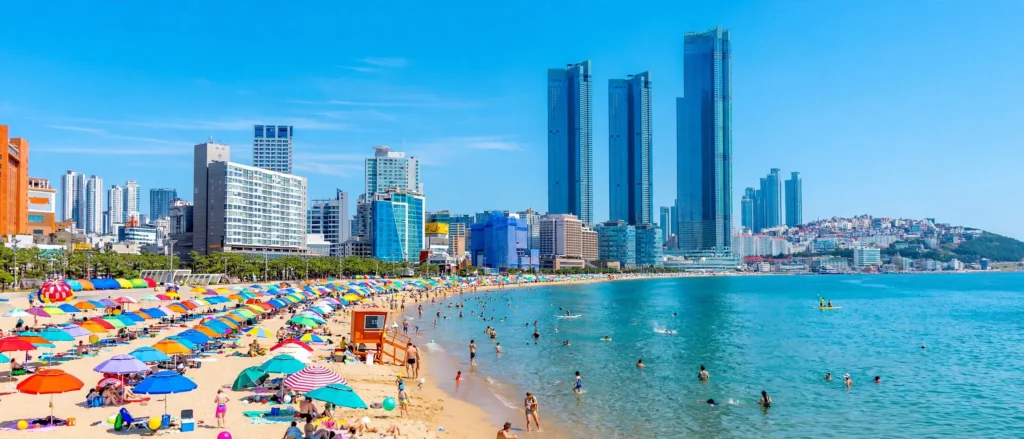
Haeundae is the beach most people picture when they think of Busan — a wide curve of soft sand backed by skyscrapers, with the whole city right behind the beach. The water is calm and swimmable in season (late June to early September), lifeguards watch the marked zones, and umbrellas and mats are rented along the promenade. Cafés, seafood restaurants and hotels fill the streets one block back.
Best for: first-time visitors, families, and anyone who wants the beach and the city in one place. Get there: Metro Line 2 to Haeundae Station (Exit 5 or 7), then a 10-minute walk to the sand.
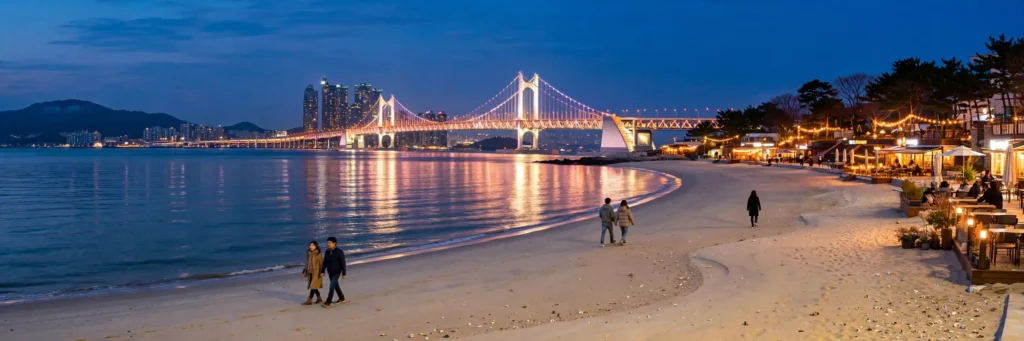
Gwangalli is Haeundae’s calmer, more romantic rival — a smooth crescent of soft sand facing the Gwangan Bridge head-on. By day it is paddleboards, beach cafés and gentle water; by night the whole bay changes mood, as the bridge lights up and reflects across the water. The streets behind the sand are packed with cafés, raw-fish restaurants and bars with sea-view windows, and the area stays lively well into the evening.
Best for: couples, sunset seekers, and anyone who prefers cafés to crowds. Get there: Metro Line 2 to Geumnyeonsan Station (Exit 1 or 3), then a 5-minute walk to the sand.
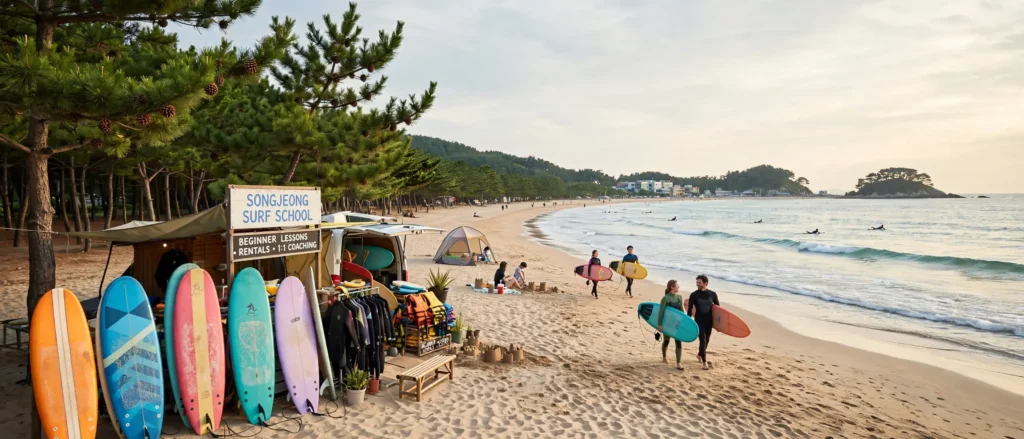
Songjeong is Busan’s laid-back surf beach — a smaller, local-feeling crescent east of Haeundae, where the waves roll in gently and steadily enough for beginners all year round. Surf schools and board rentals line the beach road, lessons run daily, and the water stays far less crowded than at the big two. Behind the sand you will find a pine grove, seafood restaurants and small cafés — and far fewer skyscrapers.
Best for: beginner surfers, and travelers who want Busan’s coast without the crowds. Get there: the scenic Donghae Line train to Songjeong Station, then a 10-minute walk — or Metro Line 2 to Jangsan Station plus a short bus or taxi ride.
From Seoul, the fast way is the KTX high-speed train: Seoul Station to Busan Station in about 2.5 hours — book ahead on summer weekends. Flights to Gimhae Airport take about 1 hour in the air, then roughly 1 hour by airport limousine bus to Haeundae. Many travelers fly in and take the train back.
Inside Busan, the metro does the work. Haeundae and Gwangalli are both on Metro Line 2 (Haeundae Station and Geumnyeonsan Station), and Songjeong is easiest on the Donghae Line train to Songjeong Station. One T-money card covers the metro, buses and trains — top it up with cash at any station or convenience store.
Haeundae — pick it for your first Busan trip. The widest sand, the calmest swimming, and every hotel and restaurant you could want, right behind the beach.
Gwangalli — pick it for evenings. Sunset over the water, the bridge lighting up at night, and café-lined streets that stay alive after dark.
Songjeong — pick it to surf, or to slow down. Beginner-friendly waves, board rentals everywhere, and a local feel the big beaches have lost.
Comparing Busan with the rest of the coast? See our complete Korean Beaches guide →
Straight answers about Busan’s three beaches — where to swim, where to surf, and where to watch the bridge light up.
Haeundae. It has the widest sand, the calmest swimming in season, and the most hotels, cafés and restaurants right behind the beach — all within walking distance of the metro.
Songjeong Beach. The waves are gentle and steady, surf schools line the beach road, and board rentals with beginner lessons run all year. Most first-timers are standing up within one lesson.
For swimming, late June to early September — lifeguards are on duty and August water is warmest, about 77°F (25°C). For sunsets, beach walks and smaller crowds, May and October are lovely, but the sea is chilly then.
Take the KTX train from Seoul Station to Busan Station (about 2.5 hours), then Metro Line 2 toward the beaches — about 40 minutes to Haeundae. Or fly to Gimhae Airport (about 1 hour) and take the airport limousine bus straight to Haeundae.
Gwangalli, no contest. After dark the Gwangan Bridge lights up across the bay, and the cafés and bars behind the beach have front-row views of it.
One page, everything you need: what to pack, the apps to install, money and subway basics, and the best months to swim — made for US travelers.