
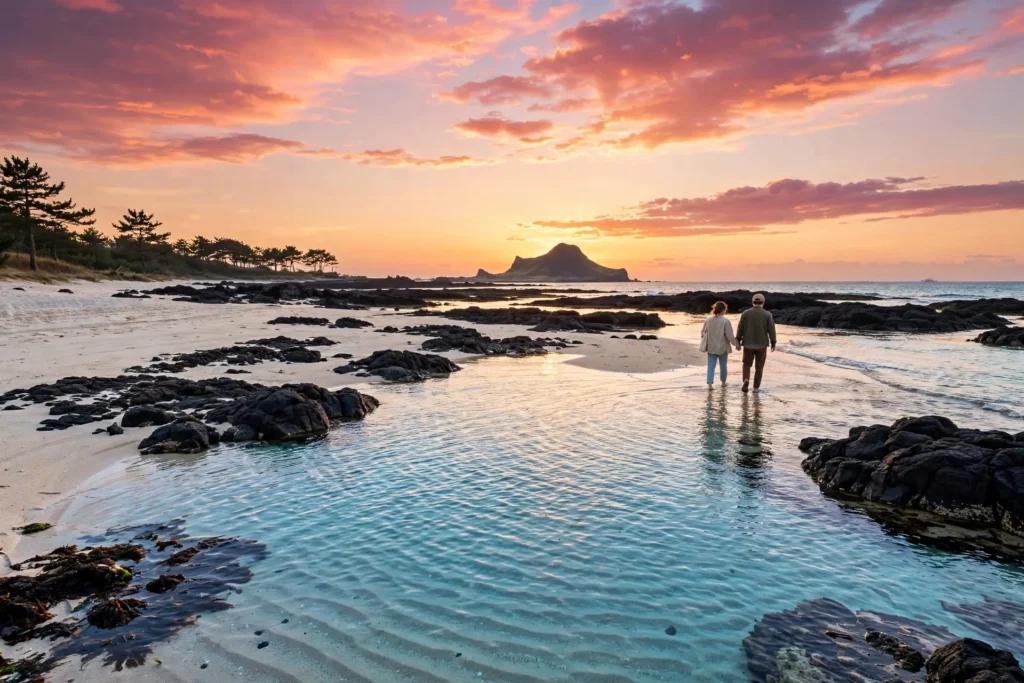
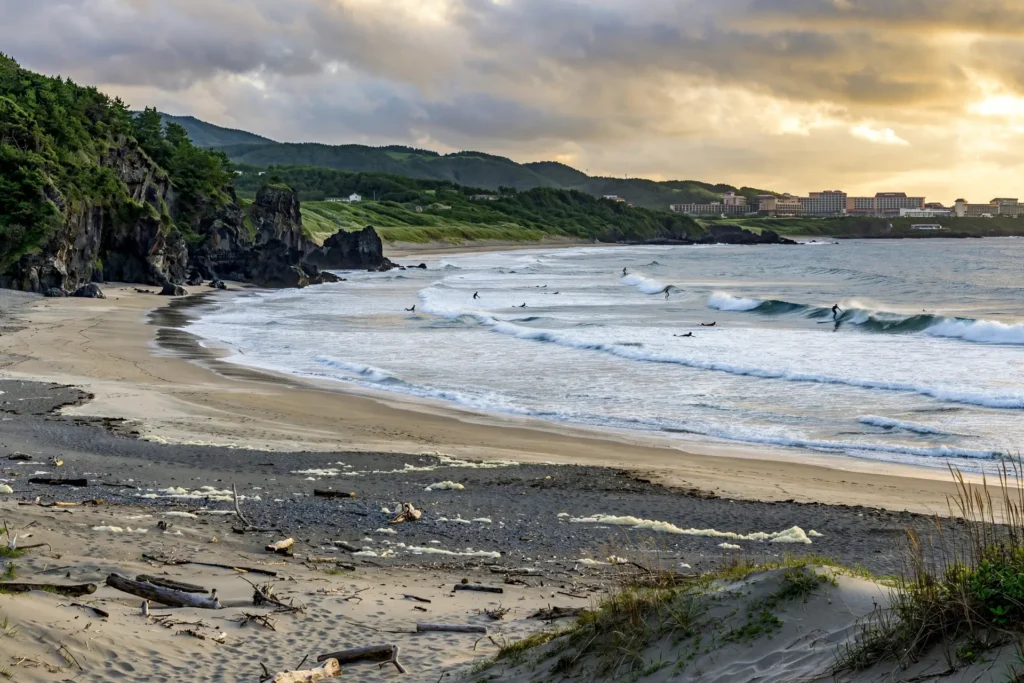
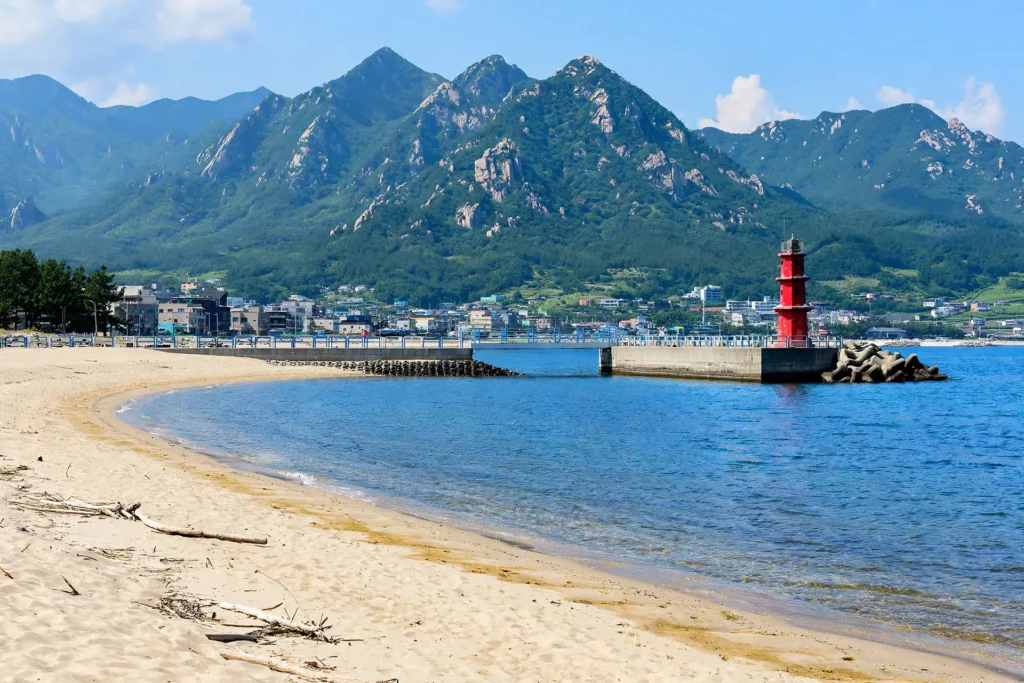
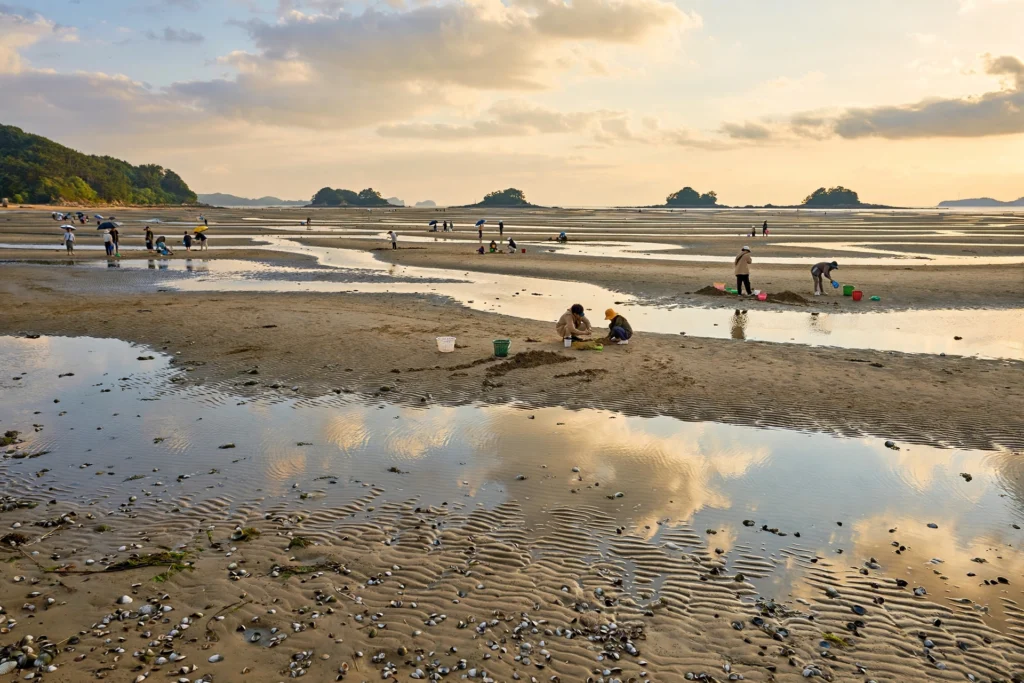
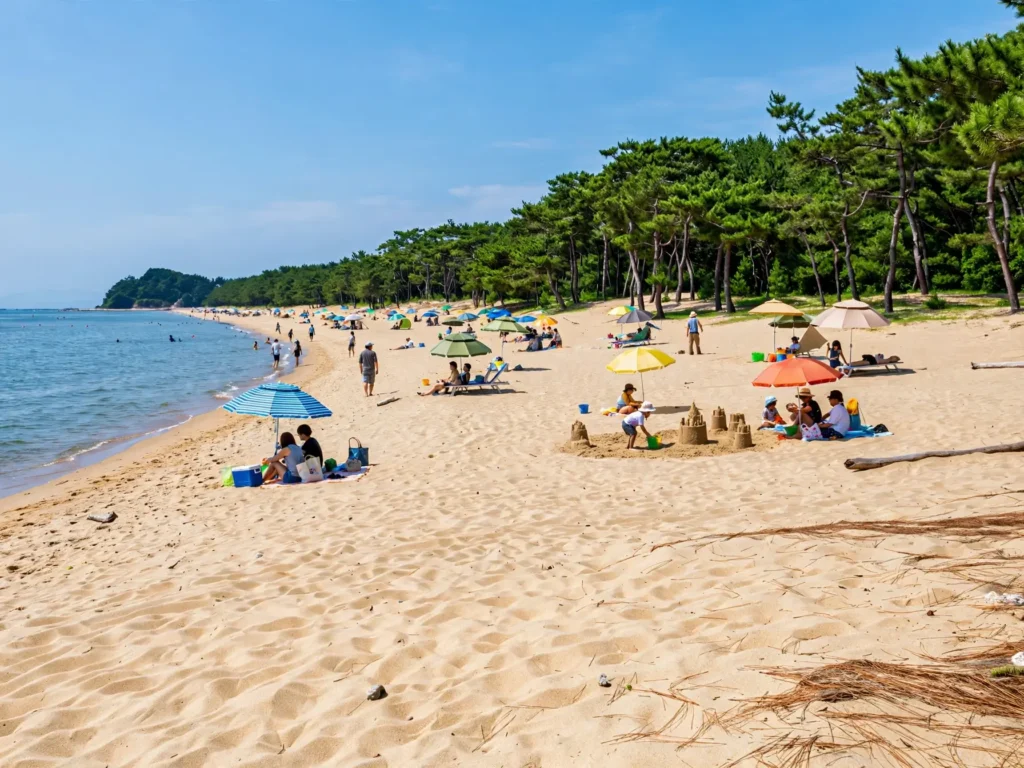
Compare the 9 best beaches in Busan, Jeju, the East Coast and near Seoul — with swim seasons, flight times from the US and honest pros and cons, in plain English.
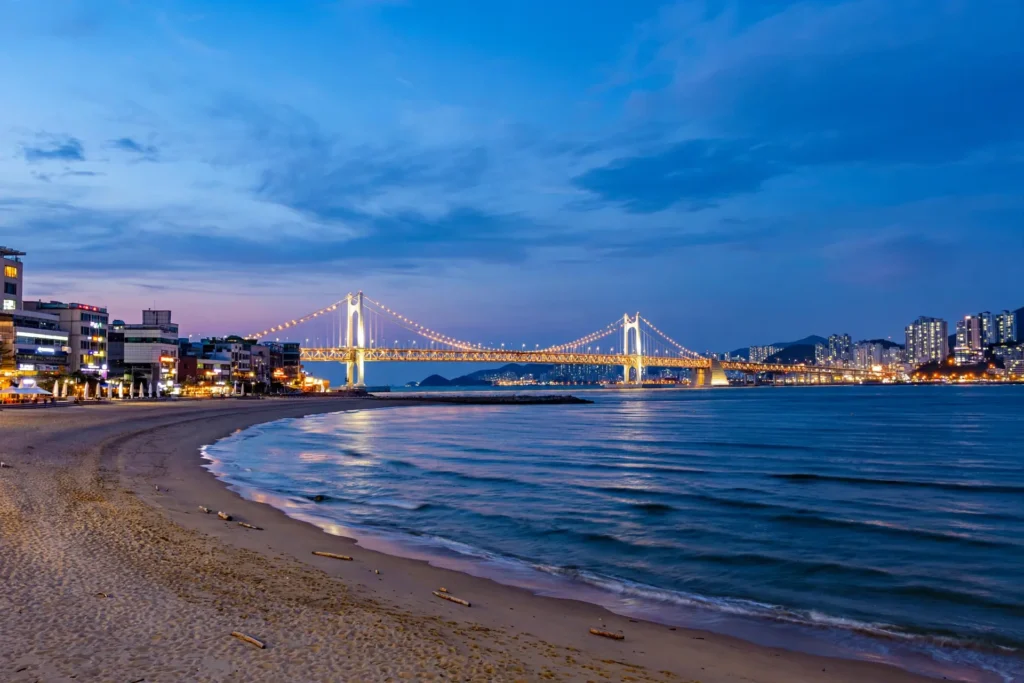
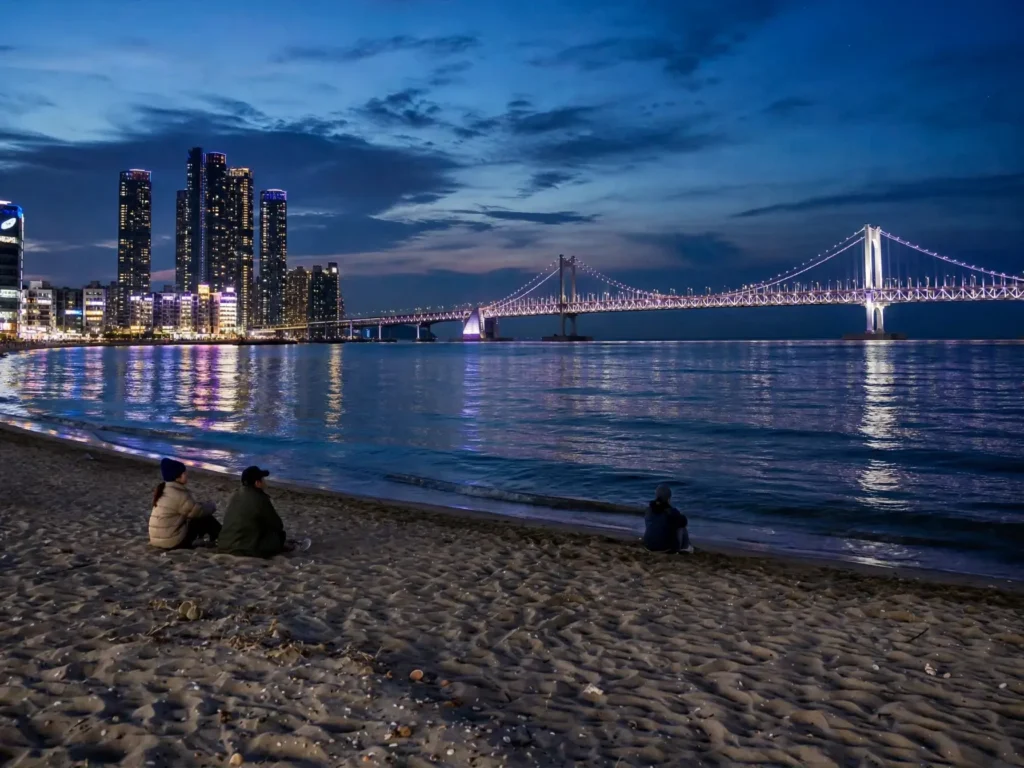
Busan’s night beach — soft sand facing the lit-up Gwangan Bridge, with cafés right behind it.
Fly into Seoul Incheon (ICN). Busan is about 2.5 hours by KTX train; Jeju is a 1-hour flight.
The official swim season runs late June to early September. August water is warmest — about 77°F (25°C) — and busiest.
Google Maps barely works in Korea. Use Naver Map or KakaoMap to get around, and Papago to translate.
Cards are accepted almost everywhere. Pick up a T-money card for subways and buses — top it up with cash.
Straight answers to the questions US travelers ask most — swim seasons, getting around, and the apps that actually work in Korea.
The official swim season runs from late June to early September, when lifeguards are on duty and the water is warmest — around 77°F (25°C) in August. Late June and July can bring rainy-season showers, so late July to late August is the safest bet for a beach trip.
At most major beaches, swimming is only allowed in the marked zones during the official season, when lifeguards are present. Outside those dates you can still walk the sand and enjoy the views, but entering the water may be restricted — always follow the signs and flags on the day.
Take the KTX high-speed train from Seoul Station to Busan Station — about 2.5 hours. From Busan Station, the subway takes you to Haeundae in about 40 minutes and to Gwangalli in about 30 minutes. Flying to Gimhae Airport (Busan) takes about 1 hour, plus a short ride into the city.
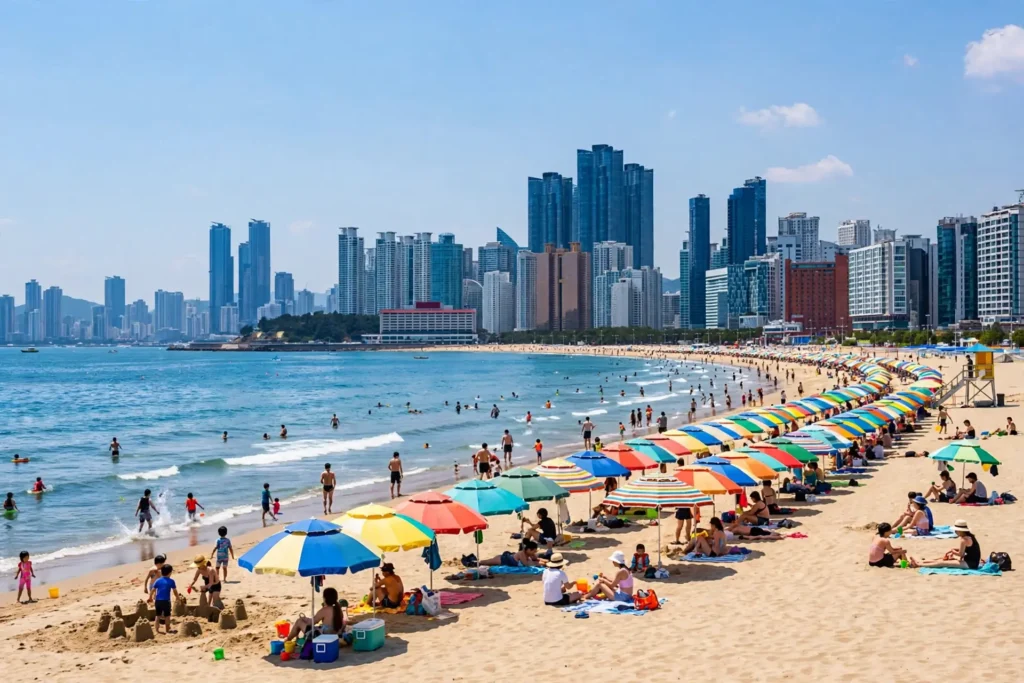
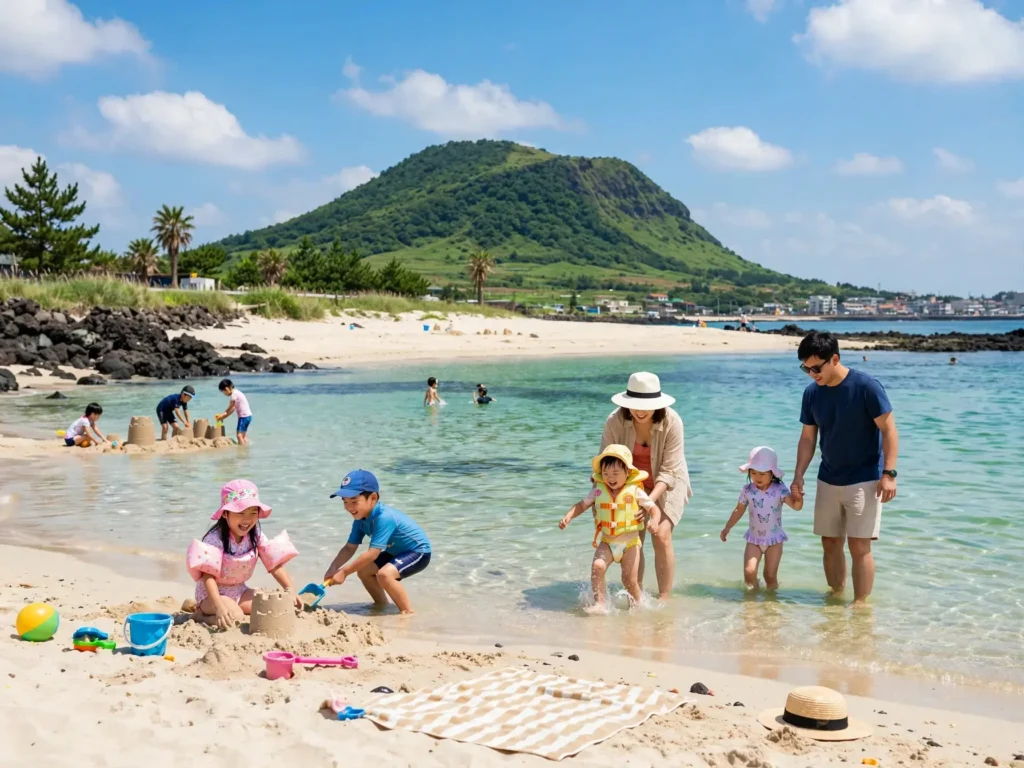
Haeundae in Busan is the easiest first beach: a wide sandy shore, plenty of hotels and restaurants, and a subway station a short walk away. Pick Gwangalli if you love beach cafés and night views, and Hamdeok on Jeju Island if you are traveling with kids.
S passport holders can currently enter South Korea visa-free for short tourist stays of up to 90 days, and the K-ETA electronic authorization has been waived for US visitors in recent years. Rules do change, so check the official K-ETA website (k-eta.go.kr) before you fly.
Not well — Google Maps cannot give proper walking or driving directions in Korea because of local map-data rules. Use Naver Map or KakaoMap for directions and bus times, and the Papago app to translate Korean menus and signs.
Warmest water — about 77°F (25°C) — and every beach is open with lifeguards. Also the busiest months, so book stays early.
Swim season without the peak crowds. Late June can bring rainy-season showers; in early September the water is still warm.
Mild 60s–70°F (18–24°C) days made for beach walks and coastal cafés — but no lifeguards, and the sea stays chilly.
Too cold to swim, but the beaches are nearly empty — sunrises, seafood and coffee streets with no lines.
One page, everything you need: what to pack, the apps to install, money and subway basics, and the best months to swim — made for US travelers.