Where to Stay Near South Korea's Beaches

The right base can make or break a Korea beach trip. So this guide skips the hotel listings and answers the question that matters first: which area should you sleep in? Below are the best areas to stay for every beach in our four regional guides, what each type of Korean stay actually is, and the small things — heated floors, shoes at the door — that catch first-time visitors out.

4 regions · 12 stay areas Typical prices in USD Made for US travelers

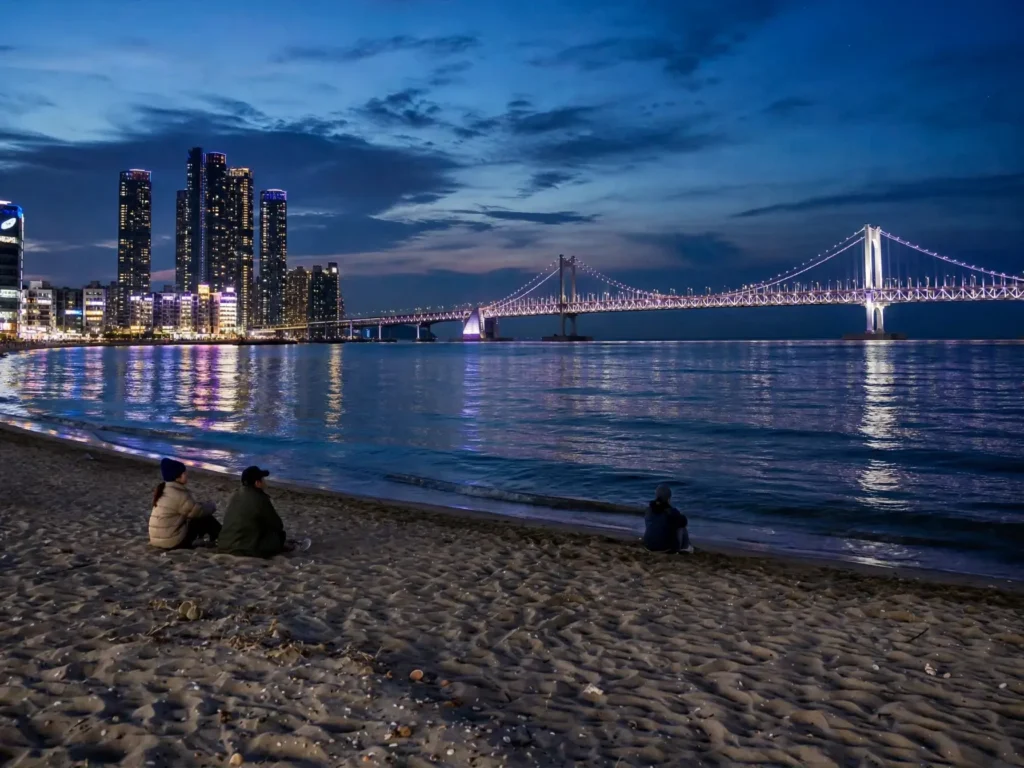
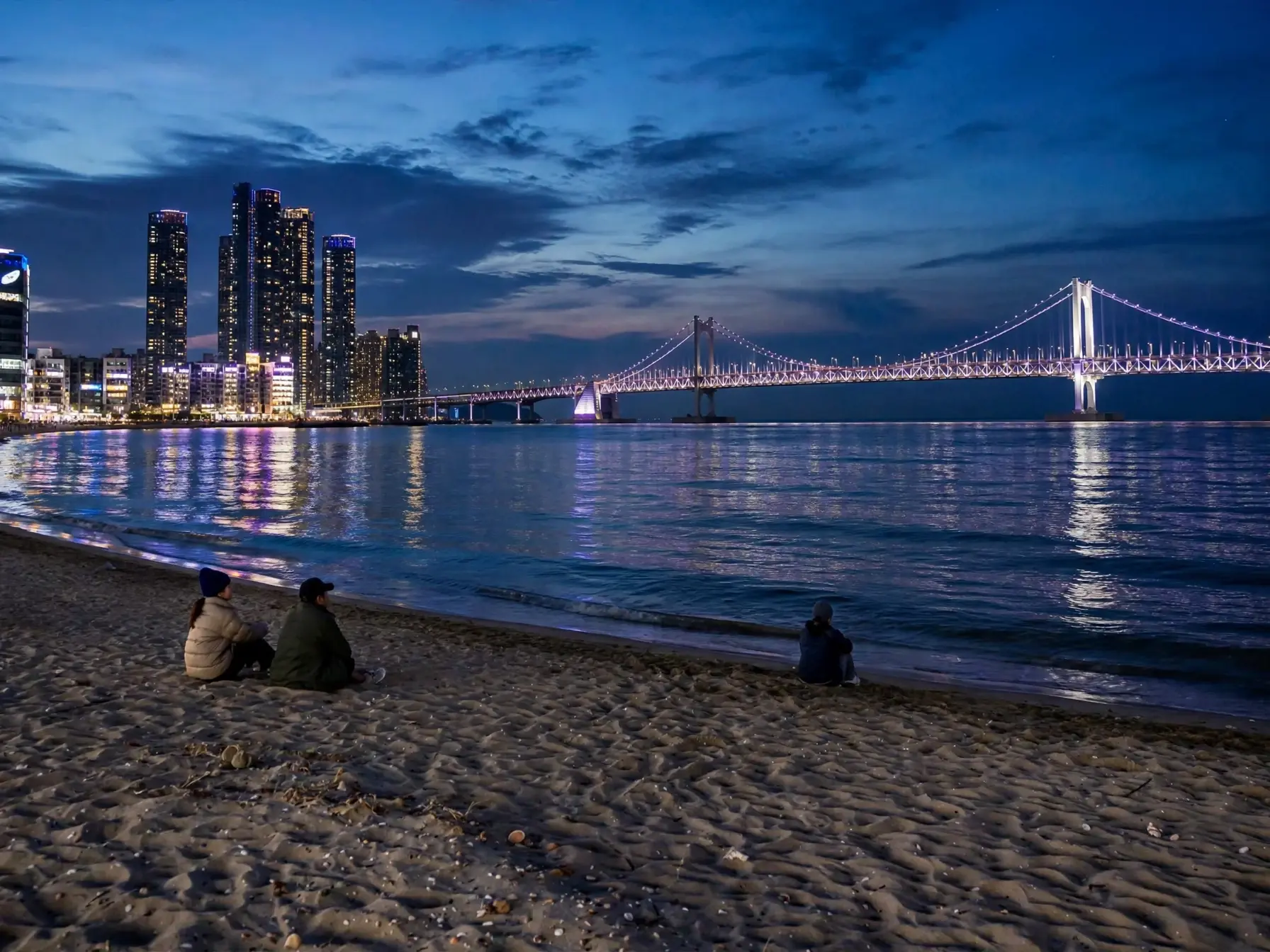
Gwangalli Beach, Busan — stay on the streets behind the sand and this skyline is your evening view.

Short on time? Start here

First beach trip

Base in Haeundae or Gwangalli, Busan — subway behind the beach, the most choice, the least planning.

Families

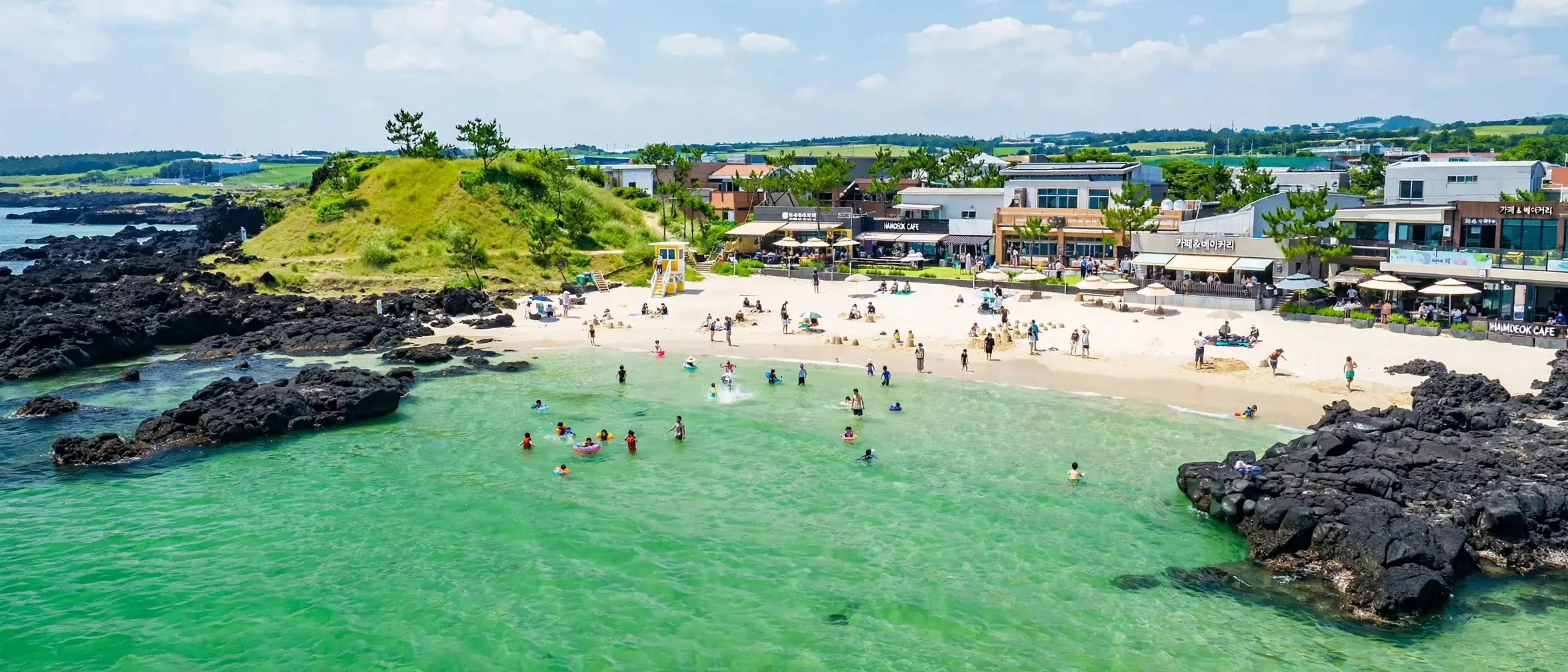
Hamdeok, Jeju — shallow, calm water and cafés along the shore path.

Surf & coffee

Songjeong for surf lessons, Anmok for cafés right on the sand.

No car

Gyeongpo, Gangneung — about 2 hours from Seoul by KTX train, then a short taxi to the beach.

Busan: Stay in the Beach Districts

Read the Busan beach guide →

Busan is the easiest place in Korea to stay beachfront, because the beaches sit inside the city with subway lines right behind them. Pick one beach as your base and day-trip to the other two — they are all on or near Line 2.

Gwangalli Beach at night with the Gwangandaegyo Bridge lit up, Busan, South Korea

The Gwangan Bridge lights up every night — the view that makes Gwangalli rooms worth it.
Haeundae

Best for first-timers & families

Stay along the beachfront road or a few streets back near Haeundae Station. This is Busan’s biggest beach, with the widest choice of hotels, restaurants and cafés — and the least chance of a wrong pick. Book a high floor if you want the sea view without the boardwalk noise.

Typical night: $70–180 beachfront hotels in summer · $45–90 a few streets back

Gwangalli

Best for couples & night views

Stay on the streets directly behind the beach so your window faces the Gwangan Bridge. Quieter than Haeundae by day, livelier after dark, with cafés and bars along the front. Bridge-view rooms cost more — on this beach, the view really is the point.

Typical night: $60–140 · expect a premium for a direct bridge view

Songjeong

Best for surfers & slow mornings

Stay in the village streets by the surf beach, at the quiet eastern end of the city. Korea’s learn-to-surf beach runs on small guesthouses and pensions rather than big hotels, and the mornings here feel nothing like the city 20 minutes away.

Typical night: $40–90 · mostly small, family-run stays

Jeju: Pick a Coast, Then a Village

Read the Jeju beach guide →

Jeju is an island, and its beaches are spread around the coast — so "Jeju City or Seogwipo?" is the first real decision. Renting a car is the norm here. Without one, base in Jeju City and take the bus east to Hamdeok.

Hamdeok Beach on Jeju Island with turquoise water and Seoubong hill behind the sand

Hamdeok from above — the shallow turquoise water is why families pick this beach.
Hamdeok

Best for families

Stay in Hamdeok village, about 30 minutes east of Jeju City. Shallow, calm, famously clear water, a shore path lined with cafés, and Seoubong hill for a sunset walk. Stays are pensions and small hotels rather than big towers.

Typical night: $60–130 sea-view rooms go first in summer

Hyeopjae

Best for sunsets & slow stays

Stay in Hyeopjae or the neighboring Hallim area on the west coast. White sand, black lava rock, and Biyangdo island sitting in the sunset. The village is small and café-led — pensions, guesthouses and a slower pace than the north coast.

Typical night: $50–110 many stays are a short walk, not beachfront

Jungmun

Best for resort comfort

Stay inside the Jungmun Resort Complex in Seogwipo, on the south coast. This is Jeju’s polished resort strip — large properties with pools, gardens and restaurants on site, above a dramatic cliff-backed beach. It is the island’s splurge option.

Typical night: $130–300 full-service resorts, priced like it

East Coast: Small Towns, Big Sea

Read the East Coast beach guide →

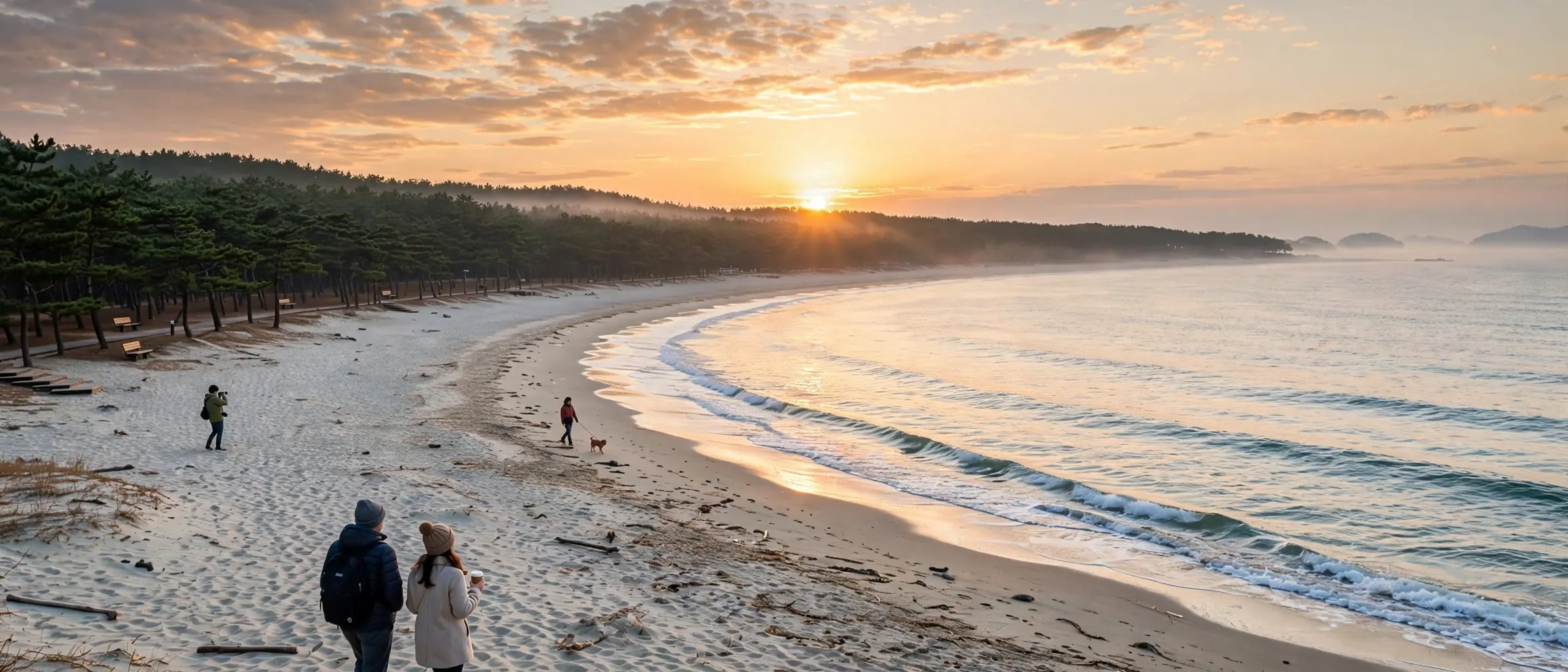
The east coast runs on the KTX: Seoul to Gangneung takes about 2 hours. The towns are smaller than Busan, stays lean toward pensions and motels, and the water is the deep blue of the East Sea (Donghae).

Gyeongpo Beach in Gangneung, a long curve of sand with hotels and pine trees behind it

Gyeongpo's beachfront strip in Gangneung — hotels line the sand, with the lake just behind.
Gyeongpo, Gangneung

Best for a first east-coast trip

Stay along the Gyeongpo beachfront strip, or near Gangneung Station if you are arriving late by train. A long, wide beach with pine trees behind it, Gyeongpo Lake a short walk inland, and the biggest choice of stays on this coast.

Typical night: $60–140 lake-view rooms are the quieter pick

Sokcho

Best for beach + mountains

Stay near Sokcho Beach or around the Express Bus Terminal. This is the two-for-one town: swim in the morning, ride up Seoraksan after lunch. Expect pensions, motels and a few mid-range hotels rather than resorts.

Typical night: $50–120 weekends from Seoul fill up fast

Anmok, Gangneung

Best for coffee lovers

Stay on or just behind Anmok Coffee Street, the famous row of cafés facing the sand. Most stays are small hotels and pensions a street or two back — or base in Gangneung town and treat Anmok as your morning ritual.

Typical night: $50–110 wake up to coffee with a sea view

Near Seoul: The Short-Haul Coast

Read the Beaches Near Seoul guide →

Most of these work as day trips — but staying out by Incheon's airport islands turns a layover or a last night in Korea into a proper beach evening, facing the sunset instead of a departure board.

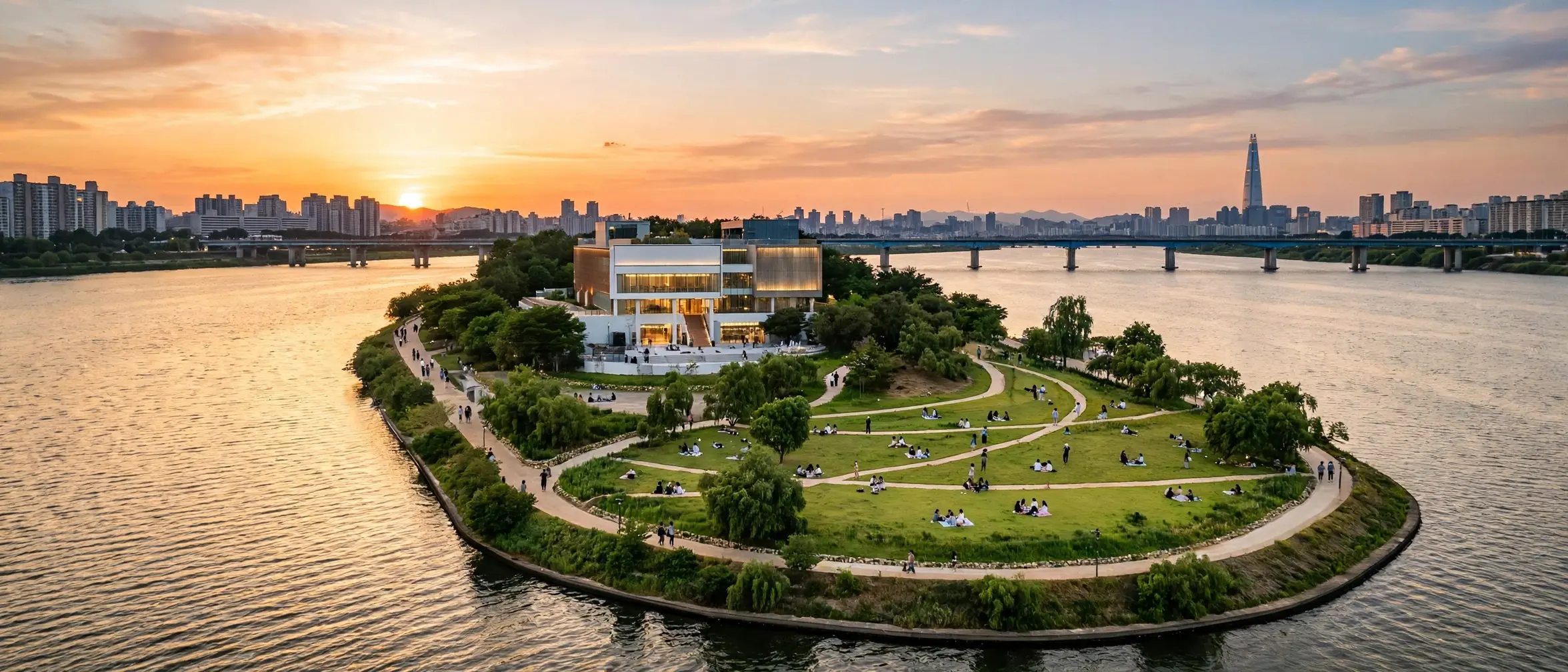
Nodeul Island in the Han River at sunset, Seoul, South Korea

Nodeul Island in the Han River — no stays on the island itself, so base in Yongsan or Yeouido.
Eurwangni, Yeongjong Island

Best for layovers & last nights

Stay along the Eurwangni beachfront, roughly 20 minutes from Incheon International Airport. A west-facing sunset beach lined with seafood restaurants, with hotels and pensions behind the sand — an easy final night before a morning flight.

Typical night: $50–110 confirm the hotel's airport shuttle times

Muuido & Hanagae

Best for a quiet weekend

Stay in a pension on Muuido, reached by a bridge from Yeongjong Island. Hanagae Beach is known for its row of cottages on stilts above the mudflats and big west-coast tides — come for quiet, not nightlife.

Typical night: $45–100 pensions and beach cottages

Nodeul Island, Seoul

Best for a no-swimming city escape

There is nowhere to stay on Nodeul itself — it is a park island in the Han River, all lawns, bookshops and sunset views. Stay in Yongsan or Yeouido instead and walk over the Hangang Bridge for golden hour.

Typical night: $70–160 standard Seoul hotel range in those districts

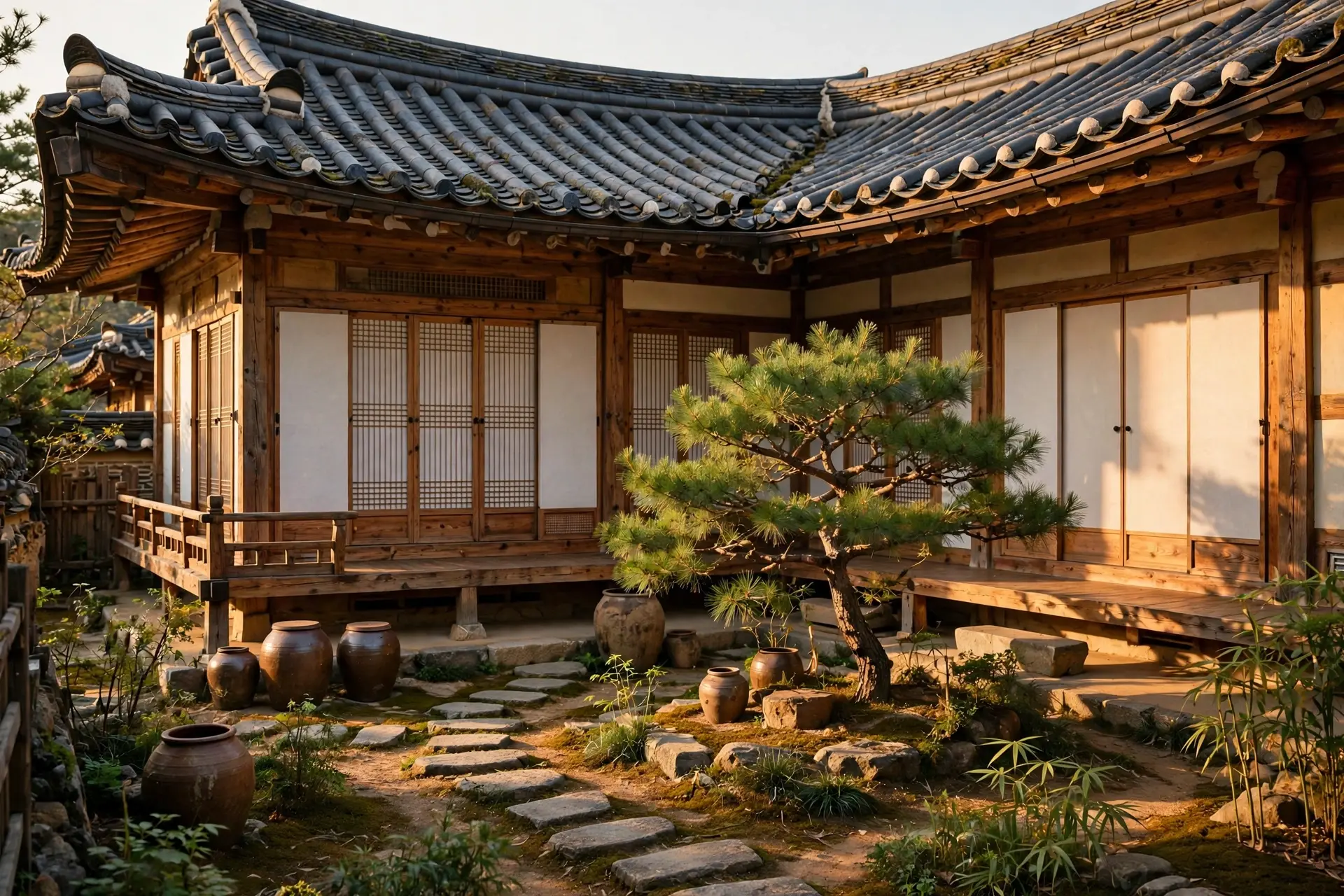
Courtyard of a traditional Korean hanok guesthouse with a curved tile roof and wooden veranda

Korean Stay Types, in Plain English

Booking sites throw Korean words at you with no explanation. Here is what the six stay types you will actually meet are — and which travelers each one suits.

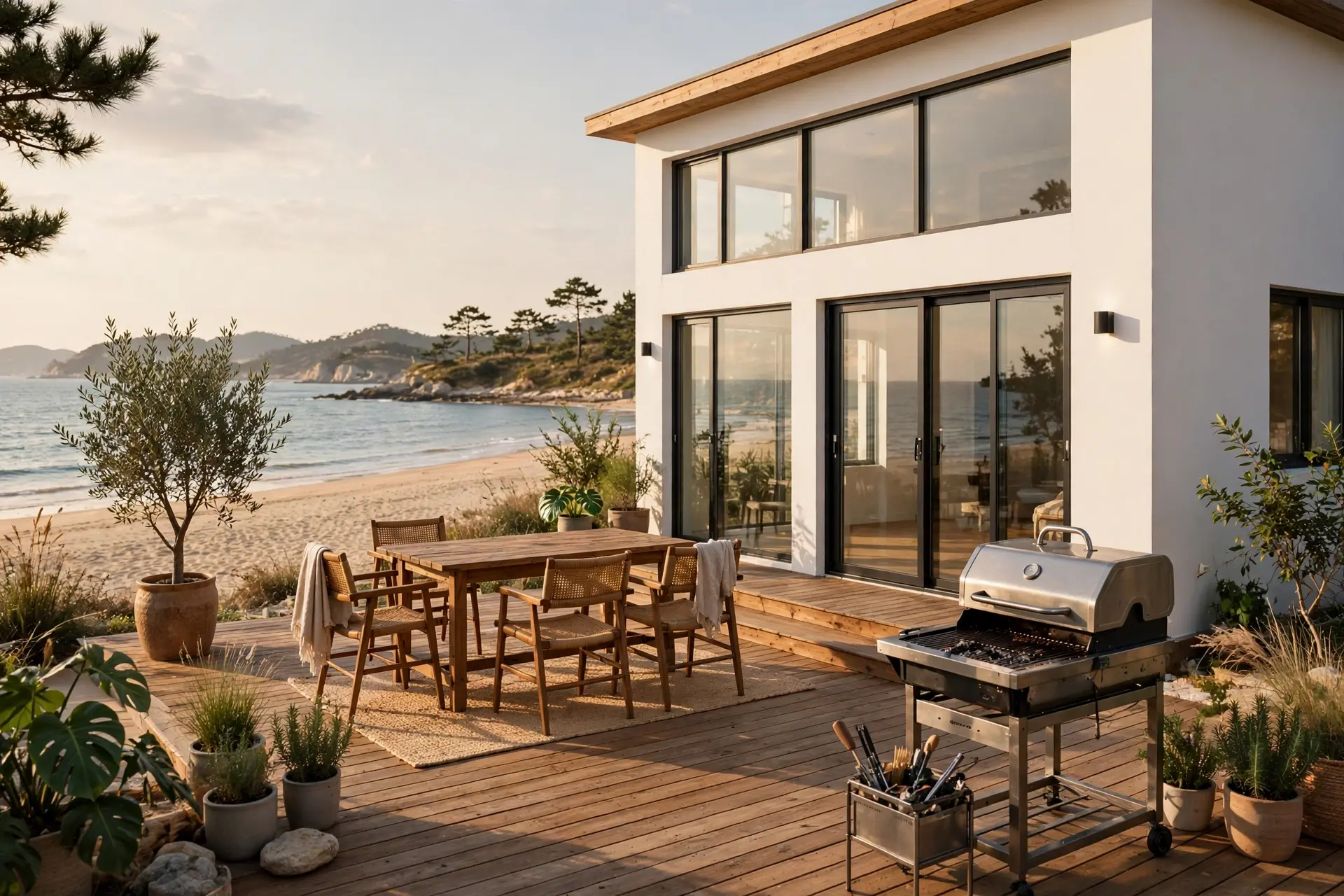
Terrace of a Korean beach pension guesthouse with a barbecue deck and the sea behind it

A beach pension terrace — grill your own seafood dinner just steps from the sand.

Hotel

What Americans picture: a private bathroom, a front desk, daily cleaning. Beachfront towers in Haeundae and Gyeongpo, business hotels near stations. Bookable on all the usual global sites.

Best for: an easy, no-surprises base

Resort

Large complexes — Jungmun on Jeju is the classic — with pools, gardens and restaurants inside the property. You pay for days spent at the hotel itself, not just a bed near the beach.

Best for: a splurge, or a family resort week

Pension 펜션

Korea's signature beach stay: a small, often family-run building of self-contained rooms, usually with a kitchenette — many add a BBQ terrace or a private spa tub. Part condo, part B&B. Book ahead in summer; some list only on Korean platforms.

Best for: groups, families, cooking your own seafood

Guesthouse

Budget and social: dorms plus a few private rooms, a shared kitchen, and hosts who hand out the best local tips. Common around surf beaches like Songjeong and in Jeju's villages.

Best for: solo travelers and tight budgets

Hanok Stay

A night in a traditional wooden house: curved tile roof, paper doors, a courtyard, and a futon on a heated floor. Hanok clusters sit in old towns (Gyeongju, Jeonju, Seoul) rather than on beaches — pair one with a coastal trip instead of expecting beachfront.

Best for: one special, very Korean night

Motel

Ignore the old reputation — many Korean motels are now clean, modern, app-bookable rooms that undercut hotels on price, especially in smaller beach towns. Check recent photos and reviews, the same as anywhere.

Best for: saving money in small towns

Good to Know Before You Book

Six small things that surprise American visitors about staying in Korea — none of them problems once you know they are coming.

01

The floor is the heater

Many Korean rooms use ondol — underfloor heating — instead of warm air. In pensions and hanok stays you sleep on a futon or low bed over that warm floor, which is wonderful in spring and fall. The controls may be labeled only in Korean, so ask your host to show you once.

02

Shoes off at the door

Every stay has a small entry step where shoes come off; indoor slippers are provided. In hanok stays and pensions this is strict, because the floor is where you sleep. Pack slip-on shoes and you will be grateful every single day.

03

Book peak summer early

Late July to mid-August is Korea's domestic vacation peak: beach towns fill up and prices climb. Book 4–6 weeks ahead for those dates. The Chuseok and Seollal holidays book out early too.

04

Check-in runs late

Standard check-in is 3 PM — pensions often 3–4 PM — with checkout at 11 AM. Arriving earlier? Hotels will usually hold your bags; a small pension often cannot, so plan a café stop instead.

05

Breakfast is not a given

Many pensions and guesthouses include no breakfast at all. That is normal, not a flaw in your booking — Korea's convenience stores (GS25, CU) and bakery chains make an easy morning run.

06

Paying can differ

International cards work fine on the global booking sites. Some small pensions listed only on Korean platforms ask for a bank transfer instead — if a place cannot take your card, there is almost always another nearby that can.

Where to Stay: Common Questions

Which beach area is best for a first trip to Korea?
Haeundae or Gwangalli in Busan. Both sit inside the city on subway lines, both have hotels at every budget within a short walk of the sand, and Busan is an easy KTX ride from Seoul. Pick Haeundae for the most choice, Gwangalli for the bridge view at night.
What exactly is a Korean pension?
A pension is a small, usually family-run building made up of self-contained rooms or units — think part condo, part B&B. Rooms typically include a kitchenette, and many pensions add a BBQ terrace or a private spa tub. They are the classic Korean beach stay, and the default choice in smaller towns and on Jeju.
How much should I budget per night?
For most beach towns, a comfortable mid-range room runs about $50–120 a night outside peak season. Beachfront hotels in Busan sit higher ($70–180), full resorts at Jungmun higher again ($130–300), and small-town pensions and guesthouses can dip below $50. Late July and August push every one of those numbers up.
Do I need a car on Jeju?
It helps a lot. Jeju's beaches are spread around the island and buses, while workable, are slow between coasts. If you would rather not drive, base yourself in Jeju City — Hamdeok is a straightforward bus ride east — and save Hyeopjae and Jungmun for a taxi day or a tour.
How far ahead should I book for summer?
For late July and the first half of August — Korea's domestic vacation peak — book 4–6 weeks ahead, and earlier for resorts and sea-view rooms. Outside that window, 2–3 weeks is usually plenty, and small towns often have rooms a few days out.
Are Korean motels actually okay to stay in?
Often, yes. The old "love motel" image is out of date for many properties: plenty of Korean motels are now clean, modern rooms booked by the night on apps, and in small beach towns they are sometimes the best-value option. Judge them the way you would anywhere — recent photos and recent reviews.

Get the Free Korea Beach Trip Checklist

One page, everything you need: what to pack, the apps to install, money and subway basics, and the best months to swim — made for US travelers.