Korean Beaches: The Complete Guide for US Travelers
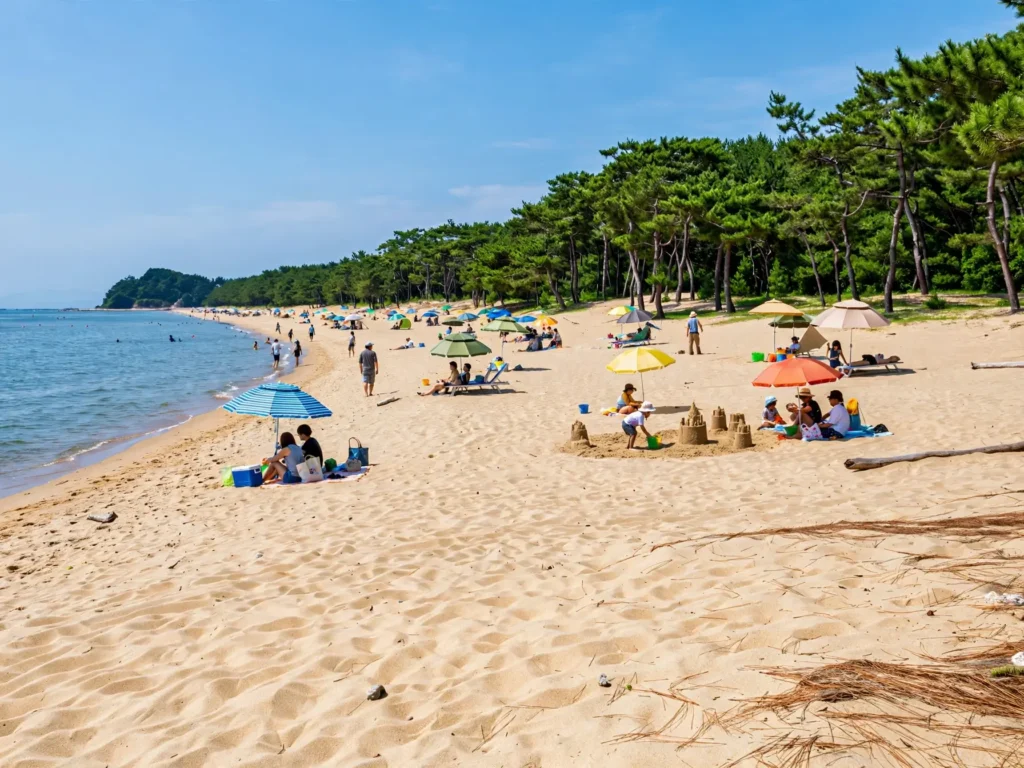
South Korea packs four very different coasts into one small country — Busan’s big-city beaches, Jeju’s island shores, the East Coast’s sunrise beaches, and easy day trips from Seoul. This guide compares all 9 beaches worth your time, in plain English.
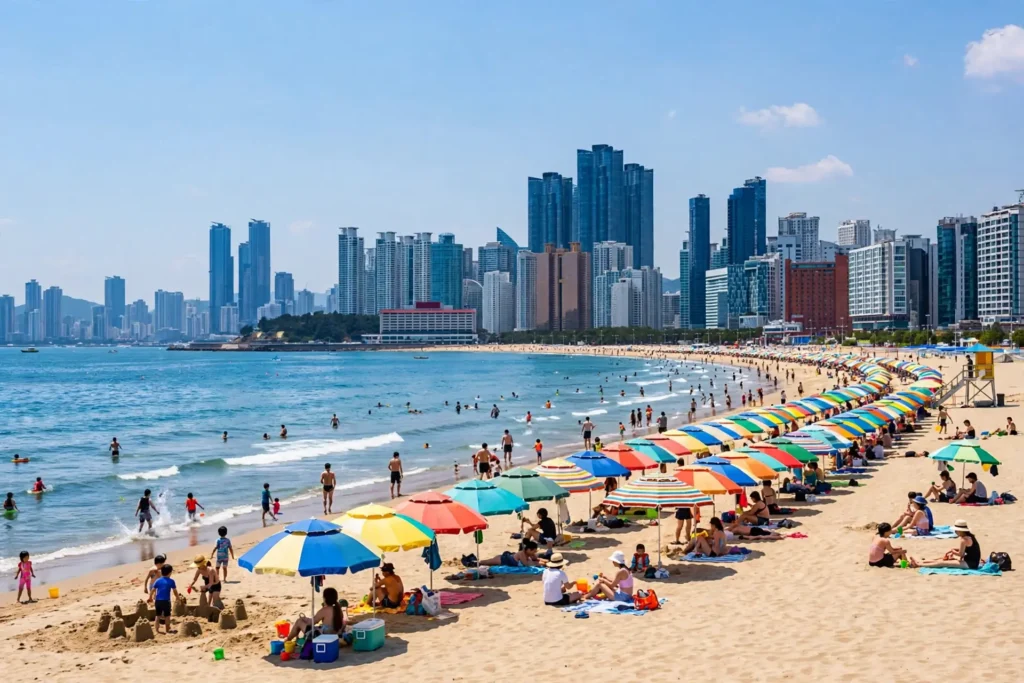
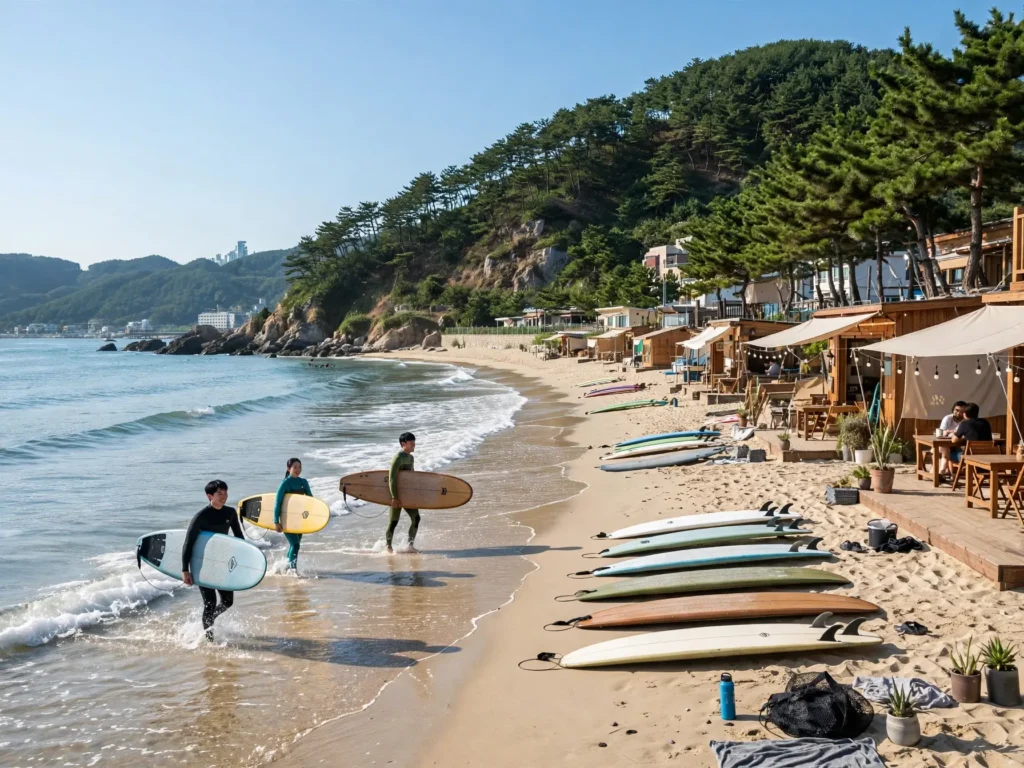
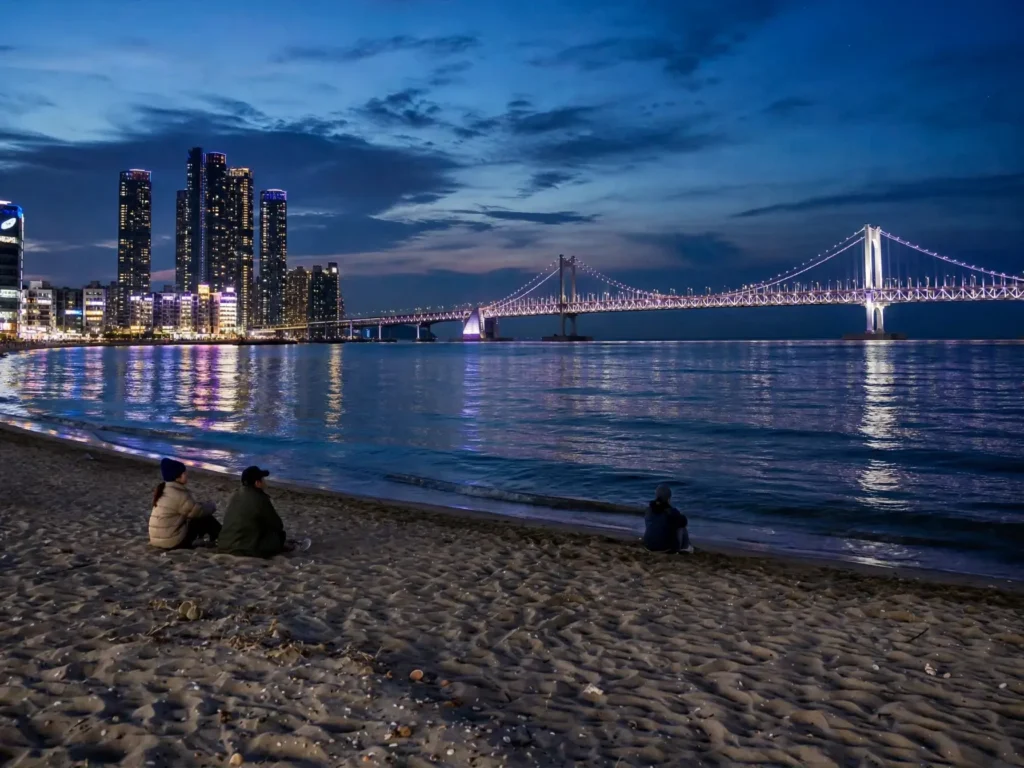
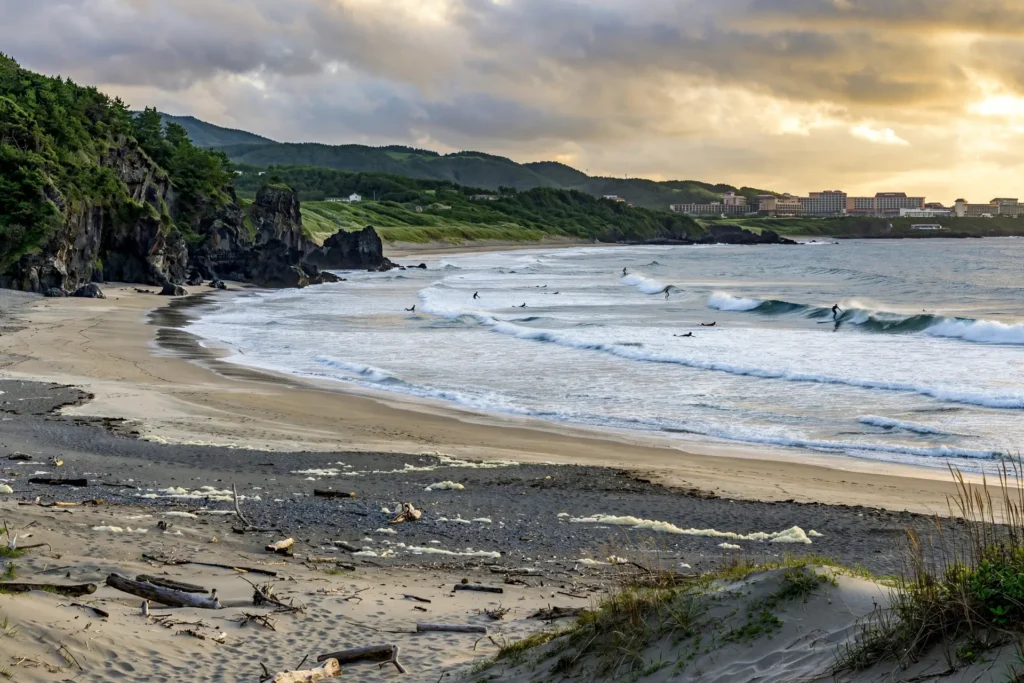
If you want a beach with a city behind it, start in Busan. Haeundae is the famous one — a wide curve of sand backed by skyscrapers, with swimming, cafés and hotels a few minutes’ walk away. Gwangalli is the evening beach: softer sand, calmer water, and the Gwangan Bridge lit up across the bay. Songjeong, a short ride east, is where Korea learns to surf — gentle waves, board rentals and lessons all year round. Busan is also the easiest beach city to reach: about 2.5 hours from Seoul by KTX train.
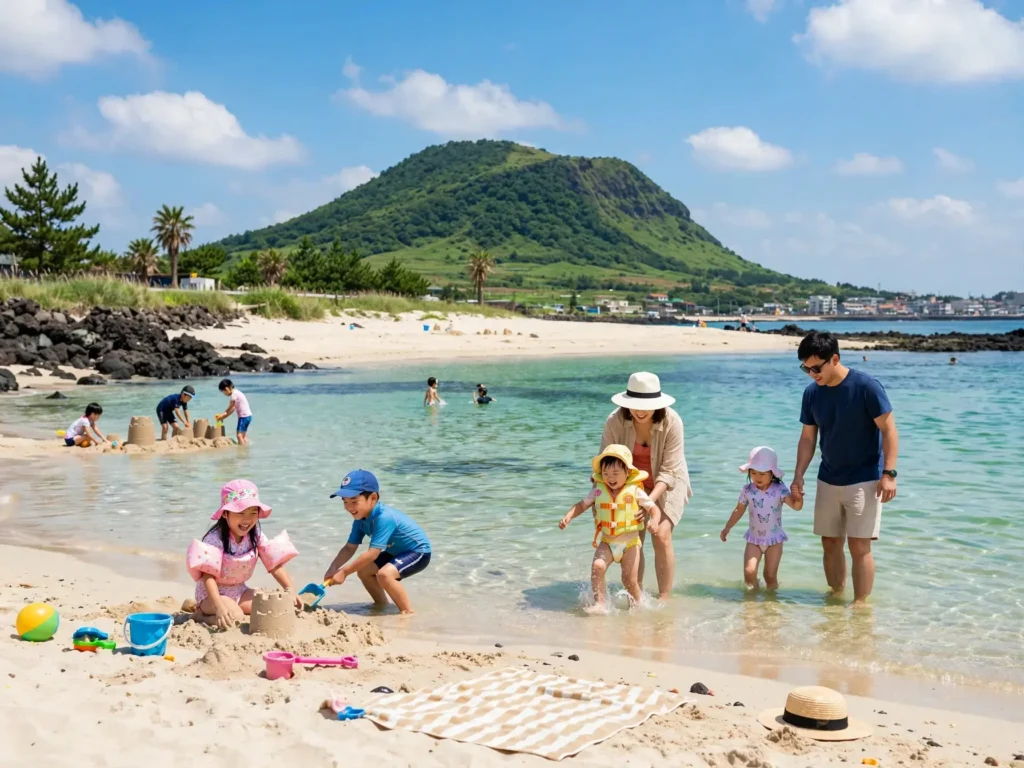
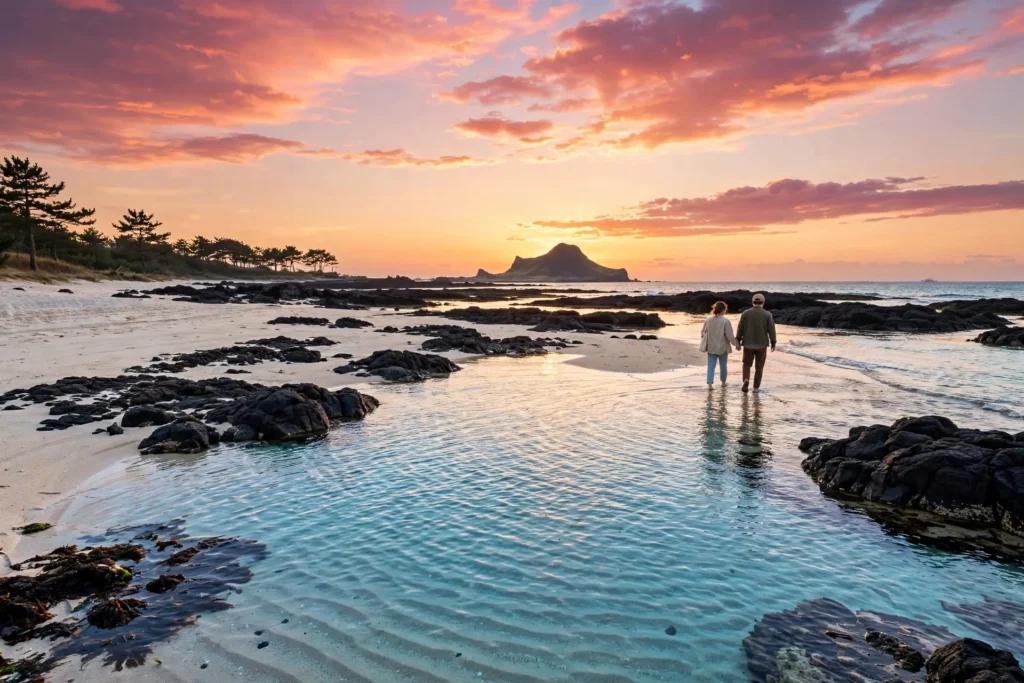
Jeju is the island escape — a 1-hour flight from Seoul, with the clearest water in Korea. Hamdeok is the family favorite: a shallow, sheltered bay where kids can splash safely. Hyeopjae, on the west coast, pairs white sand and turquoise water with sunset views of tiny Biyangdo island just offshore. Jungmun Saekdal, in the south, is the resort coast — bigger waves that draw surfers, golden-grey sand and cliffs behind the beach. Rent a car if you can: Jeju’s beaches are spread around the island, about 30–60 minutes apart.
If you want a beach with a city behind it, start in Busan. Haeundae is the famous one — a wide curve of sand backed by skyscrapers, with swimming, cafés and hotels a few minutes’ walk away. Gwangalli is the evening beach: softer sand, calmer water, and the Gwangan Bridge lit up across the bay. Songjeong, a short ride east, is where Korea learns to surf — gentle waves, board rentals and lessons all year round. Busan is also the easiest beach city to reach: about 2.5 hours from Seoul by KTX train.
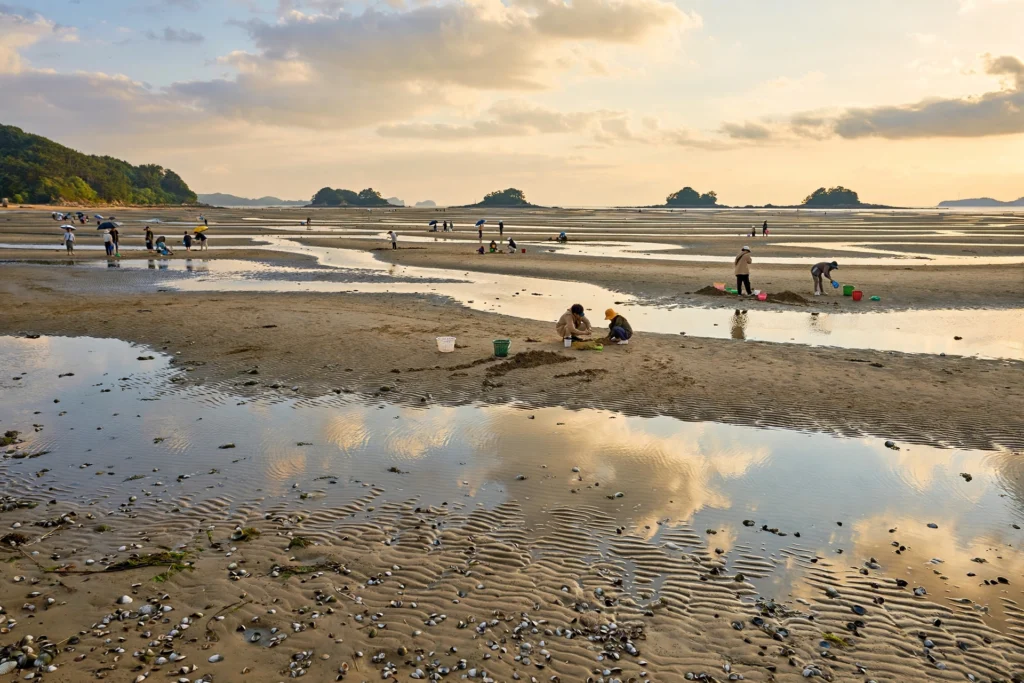
Short on time? You do not need to leave the capital area to see the sea. Eurwangni Beach, near Incheon Airport, is about 1 hour from central Seoul — a wide, shallow beach known for its sunset tidal flats and the grilled-clam restaurants along the shore. It is the easiest beach to add to a Seoul trip: go in the afternoon, watch the sun go down over the flats, and be back in the city in time for dinner.
Fly into Seoul Incheon (ICN). KTX trains reach Busan in about 2.5 hours and Gangneung in about 2 hours; Jeju is a 1-hour flight.
Beaches officially open from late June to early September, with lifeguards on the major beaches. August water is warmest — about 77°F (25°C) — and busiest.
Google Maps barely works in Korea. Use Naver Map or KakaoMap to get around, and Papago to translate.
Cards are accepted almost everywhere. Pick up a T-money card for subways and buses — top it up with cash.
Straight answers to the questions US travelers ask most — swim seasons, getting around, and the apps that actually work in Korea.
Fly into Seoul Incheon (ICN) first. From Seoul, Busan is about 2.5 hours by KTX train, Gangneung on the East Coast is about 2 hours by train, and Jeju is a 1-hour flight. Beaches near Seoul, like Eurwangni, are about 1 hour away by train and bus.
For a first trip, Busan is the easiest — big-city beaches, great food and a fast train from Seoul. Choose Jeju for clear water and island scenery, the East Coast for sunrises and seafood, and the beaches near Seoul if you only have a day.
Give Busan at least 2 days, Jeju 3–4 days, and the East Coast 1–2 days. Short on time? Eurwangni near Seoul makes an easy half-day trip — go for the sunset and be back in the city for dinner.
Hamdeok on Jeju is the top family pick — shallow, calm water in a sheltered bay. Haeundae in Busan is a close second, with lifeguards in season, soft sand and plenty of cafés and hotels right behind the beach.
Sunscreen, swimwear and a light cover-up for cafés — most visitors dress modestly once they leave the sand. Water shoes help on Jeju’s rocky coves. You do not need bulky gear: umbrellas and mats are rented cheaply at the major beaches during swim season.
Yes — the major beaches have lifeguards and marked swim zones during the official season, late June to early September. Swim inside the buoys, watch for jellyfish warnings in August, and respect closures: beaches shut when a typhoon approaches, mostly in July to September.
One page, everything you need: what to pack, the apps to install, money and subway basics, and the best months to swim — made for US travelers.